
“We Are the Ones We’ve Been Waiting For”
Interview With JoNina Abron-Ervin
October 13, 2026
Anyone organizing today works in the shadow of the Black Panther Party for Self-Defense, which changed the way community building, self-defense, and antifascism are conceived. Beginning as a revolutionary attempt to confront police violence in 1966, the Party developed into one of the most transformative efforts in mutual aid organizing that has existed long past the Party’s relatively short life.
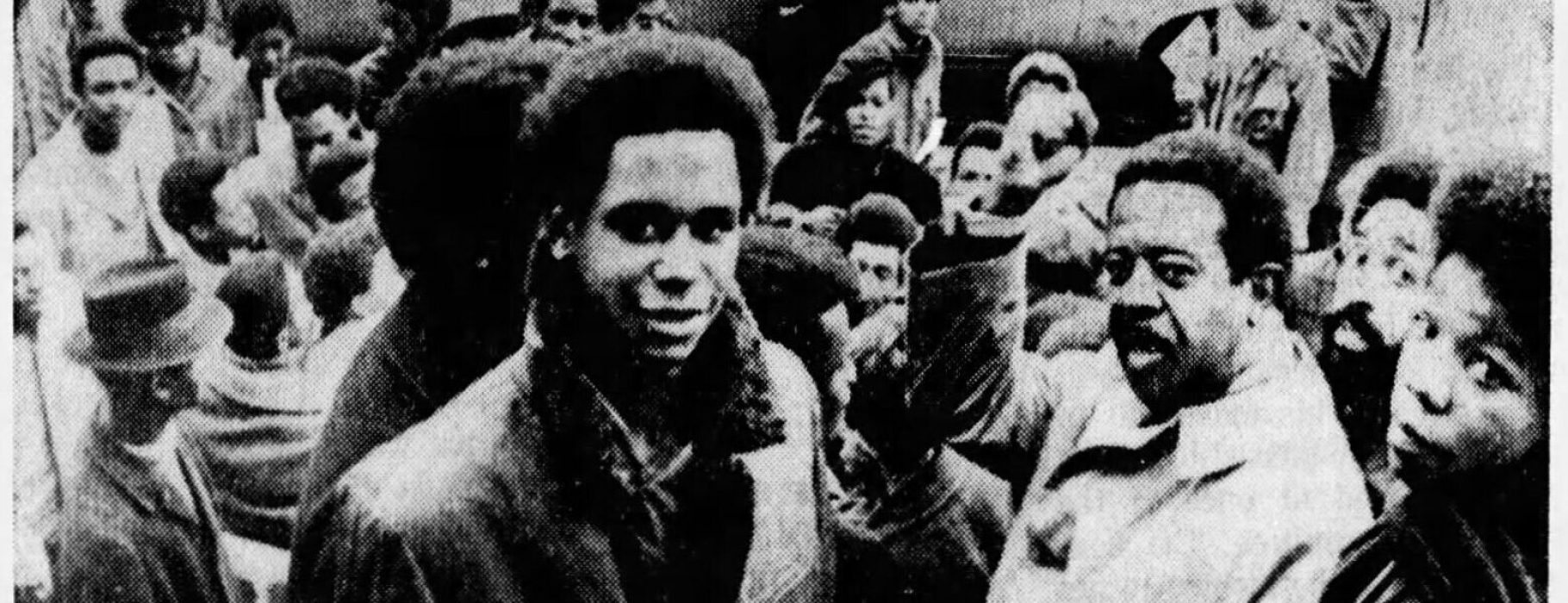
While the Black Panthers have been well documented, it is most often through the voices and experiences of its leaders. As with any organizing and community institution, the daily work was done by rank-and-file members—people whose names may be less known and yet were essential to building out their vision of community service.
This is why JoNina Abron-Ervin, a former member and the final editor of the Black Panther newspaper, wrote her book Driven by the Movement: Reports from the Black Power Era, now with a new edition published by AK Press.1JoNina Abron-Ervin, Driven by the Movement: Reports from the Black Power Era (Chico: AK Press, 2025). Abron-Ervin interviewed members across the Party’s history and talked about the role of “survival pending revolution” programs, the newspaper, and its lessons for struggle.
Shane Burley talks with JoNina about the work the Party did, how it furthered a vision of revolution, and what we need to learn from it today for the fight against authoritarianism.
It was the Black Power movement that definitely drew me in. Seeing that Black people were going to fight the racism and the oppression that we were under at the time, if we were going to have to do it, we were going to have to be organized. I figured, as an individual, I couldn’t do much by myself. I needed to be part of a group that was fighting against this oppression—against this racism and police terror. And the Black Panther Party certainly had gotten my attention amongst the Black Power groups: the Breakfast Program for children, standing up to state terror by saying that Black people had a right to self-defense. I just wanted to be part of an organization, a movement that was doing something concrete, and that’s what I did.
We were focusing at that time in Detroit on a lot of the survival programs that the Party had created. Certainly, when school was in session, we did the Breakfast for Children Program, and we would have the kids who needed breakfast and didn’t have any other way to eat before school.
We also would sell newspapers. I would go downtown Detroit with some of the other comrades and sell the Black Panther newspaper. A lot of times we’d be on one corner selling the Black Panther newspaper, and on the other corner across the street, you had the Nation of Islam selling Muhammad Speaks [the highest-circulation Black newspaper of the time]. It was a very interesting time.
Another survival program we worked on at that time was the Busing to Prisons Program. The first Busing to Prisons Program in the Party was created in Seattle, Washington, but we started the program in Detroit, too. We did not have an actual bus like they had in Seattle, so we used cars and once a month we would take relatives, family, friends, and loved ones of people who were incarcerated up to Jackson State Prison in Jackson, Michigan. Now, at the time—1972, ’73—that prison was actually the largest prison in the United States in terms of the number of people in it. There were lots of people in that prison, and once a month we would drive people up. For whatever reason, a lot of the brothers who were in the Party did not have valid driver’s licenses. I can’t recall the reason why, but they did not have driver’s licenses. So sisters like me, a lot of times, we did the driving.
It was very, very educational for me. I mean, I grew up as a preacher’s kid; my late father was a United Methodist minister. So I led a pretty sheltered life growing up where I did in the small town of Jefferson City, Missouri. I didn’t know an awful lot about, you know, what was happening in terms of prisons and jails.
Now, by this point, Attica had happened, and I certainly got a big education by watching news on television. Of course, the Attica rebellion had educated me a lot, but then actually going to a prison myself—I had never been inside a prison or jail at this point when I started driving. So actually going to Jackson State Prison for the first time at 24 years old was a brand-new experience. I had never seen anything like this before, and I had never had any idea of how many of our people were locked up.
Panthers were—we were serving the people, right? And we had to be tough and strong. But I’ll be honest and tell you that when I went into that prison for the first time, I really wanted to just break down and cry. I had no idea our people were locked up in those numbers.
Being in the Black Panther Party, having driven the people up, I could not, and I did not, cry. I was a Panther. I had to be tough, right? But when I got home, I did.
Yeah, that was the whole point of the book. The backbone of the Black Power movement, including the Black Panther Party, were the everyday people, the ones that you had never heard of. They were people in their communities. There were a few people I interviewed who were pretty well known in their region. But most people who were in the Black Power movement and in the Black Panther Party, who were the backbone of the organization, people have not heard of.
I wanted young people—I wrote this book primarily for younger people like yourself—I want them to see that the Black Power movement, the Black Panther Party, was not just made up of people who were famous. They were everyday people who wanted to change the conditions in their community.
I still think it’s very important for young people especially, but all people—even people my age, who are elders like me—may not even have understood that. They may have all thought that they were all famous people—like Huey Newton, or Ericka Huggins, or Angela Davis—that were in the Black Power movement.
So I purposely interviewed those people, many of whom I knew because I had worked with them—primarily in Oakland, California, where I did most of my work in the Black Panther Party. I knew them personally, and I knew the good work that they had done. And there were others I may not have known. But I felt like this was the backbone of the Black Power movement, and I wanted people to understand that.
You didn’t have to have some special kind of qualifications to do this work. If you wanted to change the conditions in the community, in the Black community, you had a willingness and desire to do that. That’s what you needed.
There was a split in the Black Panther Party over this notion of the survival programs, and there were those people in the Party who felt that it was not revolutionary and that we should be focused on armed struggle because they had a certain inspiration from the armed liberation struggles that were going on, particularly in Southern Africa, Zimbabwe, and places like that.
But the reality of it was, the United States is a different country. We, I think, mistakenly tried to compare ourselves to countries like Zimbabwe or other countries: other societies that were engaged in armed struggles. America is a different place. Things evolve differently, and we were not at that stage where, at least in my opinion, and in other people’s opinion too. Not everyone in the Party thought we were at that stage that we needed to be focused on armed struggle.
And we also saw that the survival programs were programs that met the everyday basic needs of people. Everyone in the Black community did not necessarily support fighting the police with guns. There are many in the Black community who did, and they loved the Black Panther Party for that. But many people did not believe in picking up the gun and fighting the police.
However, when we began the survival programs, the Black Panther Party began to attract more support in the community because we were dealing with stuff that people could really relate to. Not that they couldn’t relate to police brutality—they could—but you had a lot of people in the community who could not, in the morning, give their kids a good breakfast before they went to school. You had a lot of people who were dealing with just being able to have enough groceries, and free food helped people. You had people who were dealing with substandard schools; their kids were not getting a good education.
I call them the everyday bread-and-butter needs of people. And so that attracted a lot of people who began to support the Black Panther Party, who began to really relate more to the Party.
But, as I said, not everyone in the Party agreed. There was a tension, and it did cause a split in the Black Panther Party. It’s probably pretty well known now that there was a split. There were many forces in the Party, some of whom agreed with Eldridge Cleaver and others who felt that what we needed to be doing was fighting the armed struggle and that’s what we needed to focus on. Survival programs were not revolutionary.
Now, the reality of it is that if you are hungry, if you don’t have a place to live, decent housing, how can you really seriously talk about fighting liberation? You’ve got to be able to eat. You’ve got to have housing. These are basic needs. There are certain things that people just have—everybody has to have.
We had a program where we would test people for sickle cell anemia. Sickle cell anemia was a disease—is a disease—that the US government ignored for years because it primarily affects people of African descent or Mediterranean descent. So they really hadn’t paid much attention to it.
We saw that if we didn’t do something, nothing was ever going to be done to address this problem, which did affect Black people. So we started the first free testing for sickle cell anemia in the United States, to get that kind of screening and to find out if they had it and, if they did, what they needed to do to get treatment for it.
We also had the free clinics. Beyond sickle cell anemia, healthcare was a problem in the Black community. Not everyone in the Black community had access to good healthcare. If you weren’t employed, you might not be able to.
With the help of volunteer doctors in various places from Texas to Portland, Oregon, to Berkeley, California, who would come in and volunteer their services so that people could get decent free healthcare. People have to have good healthcare. It’s just like they have to have food to eat. They have to have housing.
We looked at this as, as you said, institution-building, as a way for us to help our survival, pending revolution, as we would say.
One of the things we were addressing in the 1970s was police brutality. Now, it was nowhere nearly as bad as it is today. Police terror right now is off the charts. It was bad then, but it wasn’t as bad as today.
We saw the police brutality and terror being enacted on the Black community as an abuse of state power: it was a form of fascism, particularly the way it was being directed against Black people and other people of color. We understood that the government was acting in an unchecked manner. It was just going in and killing, shooting, arresting, and terrorizing people in the community, and doing it at will.
At the time, the United States had what a lot of people called a national security state, in that you had agencies like the FBI and CIA. Even the United States Congress, when it issued its report on the FBI Counterintelligence Programs, said a lot of the stuff that was being done by the FBI was in direct violation of the US Constitution in terms of people’s rights, and they were just doing it. The government was doing what it wanted, when it wanted, as it wanted.
Nixon definitely wanted it that way. He wanted to do the kind of things that Trump started doing in his first term and is now definitely escalating in his second term.
At the time that Nixon was in office, we still had a portion of the Black Power movement and the New Left, anti-Vietnam War white left, still in place and able to push back. That prevented the fascist forces at that time from doing what they wanted to do.
We may have stopped them at that time, but they never gave up. They kept on organizing until we’re at the point that we’re at today.
Yeah, I’m seeing that ICE is going to be equipped with electroshock devices in many cities. This is far beyond anything we saw in the 1960s and ’70s.
We are going to have to unite and build some type of united front: people of color, Black people, people who are fighting ICE.
It does not mean we are going to agree on every issue, and it does not mean that different groups have to give up their autonomy for dealing with issues in their community that they are best equipped to handle. But when it comes to the rise of the fascist state, we are going to have to figure out a way to fight it together.
That’s going to take us talking to each other, and respecting each other as autonomous organizations, but realizing that what we’re fighting now is huge.
What a lot of people have done in different cities like Chicago and elsewhere, in Los Angeles, to fight ICE is excellent. They found a way to deal with it in their communities, dealing with the culture in their communities.
But other communities have to do the same where they’re at, and define it based on their situation, their terrain, and their culture. But it’s going to take some unity, some type of a united front. We’re going to have to start building it. It probably has started on some level, but it’s not widespread enough. We’ve got to build it on a bigger level around the country if we’re ever going to stop the growth of the fascist state that’s going on right now.
The newspaper dealt with the issues on a level that the people, in their own language, could understand. If you picked up a Panther paper and saw a police officer beating somebody over the head, that police is pictured as a pig. The Panthers deliberately started portraying police as pigs. We did that deliberately because, of course, the pig is known as the nastiest animal in the farmyard, and we wanted to help people understand what the police were in this country. By depicting them that way and seeing them in the Panther newspaper that way, people in the big cities like Los Angeles and Chicago, where police terror was bad, could relate to it.
The Panther newspaper, we also talked about issues that were going on overseas, such as the African liberation movements that were fighting the armed struggle. We had a section in the paper that would deal with that. We would talk about it in a way that people could understand. We printed pictures of armed liberation forces in South Africa, or in Zimbabwe, or in Algeria. That people could relate to, that they could understand.
I’ll never forget, I was selling the Black Panther newspaper, and a brother stopped me and gave me a quarter, and I said, “Okay, let me give you the paper.” “Oh no,” he said. “Sister, I can’t read. I don’t know how to read. I know about the paper because people read the paper to me.” He said, “You keep the paper.”
That really helped me understand how important that paper was. Here was somebody who admittedly could not read, but other people read the paper to him, and that’s what happened. That’s what people did. They read the paper to people in the community who could not read, and that’s what was so important.
That’s how what was in it spread, and that blew my mind. Sometimes you just never understand the importance of the work that you’re doing until you have some people in the community explain it to you.
I think it’s very important. A lot of the radical journalism that we’re seeing now is on YouTube and social media, people doing podcasts.
The radical press is very important. We have to have it. People need to have a way of getting information beyond what you see in the mainstream media, which just promotes the government line. If people don’t have independent voices, they’re not going to understand what’s going on in our country.
For example, the United States is an Israeli ally. Although every now and then some differences between the countries may creep into the mainstream media, unless you look to the radical media, you won’t understand about all the Palestinian people that Israel has killed, even as they’re supposed to be on an agreed-upon ceasefire. You’re not going to get that information from the mainstream media.
You’ve got to have radical press to understand what’s happening in the world that is not told through the eyes of the US government.
I really appreciate and respect a lot of the folks who are doing stuff on YouTube and in other ways to bring out this information and to help people understand that there’s a world out there that you must look at. People must understand what the viewpoint of US corporate-controlled media has never showed them.
One of the things that was important that the Party came to understand was the development of the survival programs that addressed the everyday material, concrete needs of people in the community. You can talk to people about ideology, but ultimately people have got to survive on a day-to-day basis.
And once you understand that, and you have programs that can begin to address that, that is very important.
One of the mistakes that the Party made when it was developing, and we considered ourselves a socialist organization, the models that were held up to us were from China and the Communist Party in the old Soviet Union, which of course no longer exists. So the Central Committee of the Black Panther Party modeled itself after that. At one point Huey Newton and some other Panthers went to China, and our Central Committee was patterned after that.
The reality is that the Central Committees in the People’s Republic of China and the old Soviet Union were actually authoritarian Central Committees. And so the Central Committee that the Black Panther Party had in the United States was an authoritarian Central Committee, and I think it was a mistake.
By being an authoritarian model, it cut off a lot of the people. People who were in the Party did not have enough of a voice about the decisions that were being made. You had a coordinator who was giving you instructions to do certain things certain ways, and you did what your coordinator said.
I’m not saying there was never ever any discussion anywhere in the Party about anything. But overall, the Central Committee was an authoritarian-based structure, and that was a critical mistake.
In the Black Panther Party, we were taught to believe that we were at war with the US government, and we were thinking of ourselves at war in the same way that FRELIMO was at war in Mozambique, or ZANU was at war in southern Africa. But we weren’t at war in the same way they were. They were in a period of armed struggle, and we were not. We were at a different stage in the fight. So while we were warring with the US structure of government, we couldn’t proceed in the way that they did, and trying to wage our struggle in the same way was a mistake, as well.
Self-defense is what drew a lot of people into the Black Panther Party in the early years. Seeing the Black Panther Party, when Huey and Bobby and folks would do the armed community patrols of the police in the San Francisco Bay Area, people liked that.
It drew a lot of people’s attention who said, “Wow, this is what we need, and we’ve been needing it for a long time.” It drew them into the Party.
There were other people in the community who did not think that was the correct way to proceed, but it was important because the Black Panther Party was actually standing up to the state power of the US government, saying that if the state is going to abuse the Black community, terrorize the Black community, that we have a right to defend ourselves.
At that time in California, you know, people did have a right to arm themselves. Gun laws have, of course, changed in different ways in different places around the country. But I would say that self-defense definitely drew a lot of people in the community to the Black Panther Party in the early days. I believe in self-defense. I think that people do have a right to self-defense.
Even in the days of the civil rights movement, you had a lot of people in the civil rights movement, the groups that influenced the formation of the Party, they believed in armed self-defense.
The people working with Dr. King and in the South, a lot of them had fought in Korea, and there may have been some who fought in World War II, and at some point they would start marching with Dr. King and them, and they would be armed with guns. They recognized that they needed protection.
Self-defense is extremely important. I still believe in it. We have a right to self-defense. We cannot allow the government to come in and terrorize and subject us to terror. Everyone, of course, does not agree with that, but it’s going to continue to be true in the Black community for sure.
When the Detroit chapter of the Black Panther Party relocated to Oakland in 1974 as a part of the consolidation, I had heard of anarchists. I would see them at events sometimes. What I noticed at the time was they were white people. I’m not saying there were no anarchists of color in the Bay Area in the mid-1970s. There probably were, but I never saw any, so I concluded it was a white ideology that didn’t have anything to do with Black people and people of color.
I was surprised to find Black people who were actually anarchists. Lorenzo Kom’boa Ervin, my husband—he wasn’t my husband then—he’s the first Black person I was ever aware of that was an anarchist. Meeting him brought me to the reality that there are some Black people who are anarchists.
Ultimately, for me, anarchism is a model that allows for people to participate: to organize and run their communities from the bottom up. The structure that the Party had used did not do that.
The Party made great contributions. I don’t want to take away from the Black Panther Party and say that because the Central Committee structure was authoritarian, it didn’t do great work. It did great work, but I think it could have even been much more if we hadn’t had that structure.
We had this old saying back in the day: “We are the ones we’ve been waiting for.” We are the ones. Us, just everyday people.
We got our start with Huey. Huey Newton was a political prisoner and was arrested in 1967, and then, not long after that, Bobby Seale, Ericka Huggins, and several others. A lot of Panthers were arrested simply for being Panthers.
We began to understand that there has to be support for people who are locked up, who are facing these charges. Because if there’s not a lot of public support, the prison authorities, they feel like they can do anything and everything because, well, no one knows about them. No one cares about them.
We always understood the importance of keeping attention on political prisoners. It is a long process when you’re doing this because people can be locked up for twenty-five, thirty years or more, and it does take a lot of resources. But it’s very important.
You’ve got situations like what has happened in Prairieland Texas, with the people there being sentenced to those really long sentences.3Almost two dozen protestors were arrested based on a July 4, 2025 protest at the Prairieland Detention Center in Alvarado Texas. Prosecutors claimed the demonstrators were part of an “antifa cell.” Eight of the protestors received decades-long prison sentences. Shireen Akram-Boshar, “Prairieland Protestors Sentenced to 30 to 100 years for Terrorism Charges,” Truthout, June 23, 2026, https://truthout.org/articles/prairieland-protesters-sentenced-to-30-to-100-years-for-terrorism-charges/. So defense committees are even more essential now. This is part of the rise of the fascist state. They are imposing these lifetime-long sentences on people, and so we do have to be prepared to organize for them. We do have to be prepared to defend them.
There’s going to be people whose work may primarily be building these types of defense committees to help people, because incarceration, arrest, is a tool that the fascist state right now is using to get rid of this opposition. We have to organize.
In terms of the Black Power movement, one of the things we can learn for what is going on right now, the rise of the fascist state in this country, is what the response to the Black Power movement was.
The fascists and the racists at that time, they hadn’t paid attention enough to the growth of our movement, and by the time they realized what had happened, the Black Power movement existed. So they created COINTELPRO and other methods of repression to stop it.
Ever since then, generation to generation, people who were young like I was in the 1960s and ’70s, who were young fascists then, over the years they continued to organize and build. So a lesson I have learned is that you win victories at a certain time, and we accomplished a lot. But your enemies don’t just stop. These people have kept on fighting and building over the last fifty years, and that’s what we’re up against right now.
There are going to be victories that are going to be won. There are going to be accomplishments, but there are going to be setbacks, and we’re, you know, in that period right now. There are going to be defeats.
Anytime you have a social revolution like the Black Power movement was, and there’s no question that it was, there’s always going to be opposition. There’s always going to be setbacks. We are in a period right now where we are suffering setbacks and a certain amount of defeats. You have to always consciously be aware of that, not to let it stop you, but to let it constantly remind you that setbacks will happen.
You’re always going to be dealing with people who are counterrevolutionaries, people you may have been able to work with one time that were your allies. Things change. They change.
The other thing I have learned is that everyday people were the backbone of the Black Power movement, who made it what it was. They have the power. They have the knowledge. They have the ability to build strong institutions and movements in their communities, and they did.