![Kathryn Updegraff, Hadja showing me [Kathryn] how a hand grenade is held, August 1957, The Degraff/Updegraff Archive.](https://staging.spectrejournal.com/wp-content/uploads/elementor/thumbs/algeria-5-rp3sab274z89dab8ts6gz7ln8oa3ed2f1rfv5snbko.png "Kathryn Updegraff, Hadja showing me [Kathryn] how a hand grenade is held, August 1957, The Degraff/Updegraff Archive.")
Kathryn’s story deserves to be told and heard. She was determined to enter the Algerian maquis (battlefield) and to do everything necessary to create the images that would tell the world that the Algerian people were fighting and dying for their freedom. She required funding to turn her idea into reality. She applied and was hired as a teacher of English literature at a school for young women in Istanbul. It was a post that promised proximity to the shores of North Africa, a modest salary, time off in the summer, and enough income to finally afford film and photographic equipment.
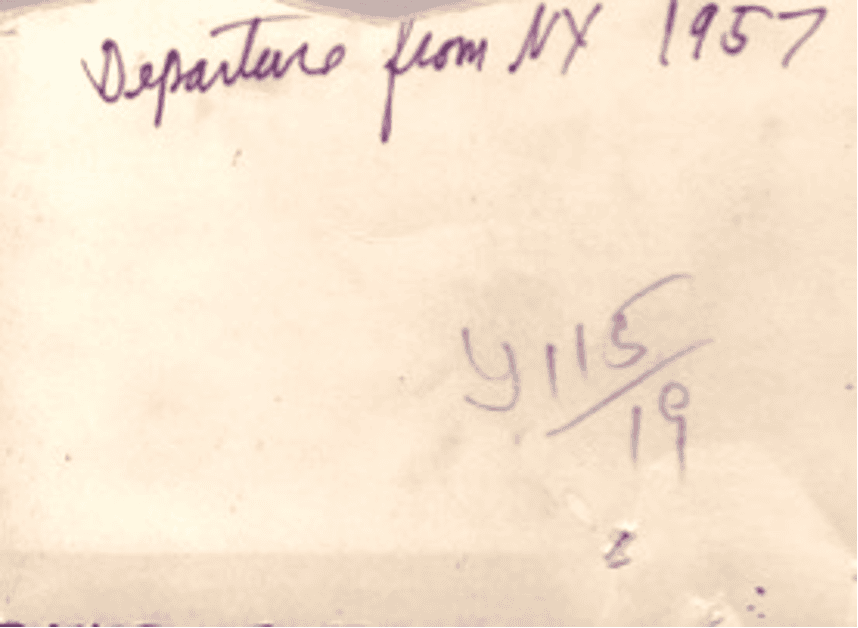
In the middle of the twentieth century, passenger planes were only beginning to fly with some frequency across the Atlantic. Airline companies were being created and schedules organized. But people had traveled the Atlantic by boat for centuries. As did Kathryn. She boarded in New York, undeterred by the fact that crossing the Atlantic was only the first leg of her journey to Algeria. In the photograph, she stands on the upper deck, raising her hand in an energetic wave, making sure her cameraman captures the moment. On the back of the photo, in faded purple-blue ink, someone has written: “Departure from NY, 1957.”
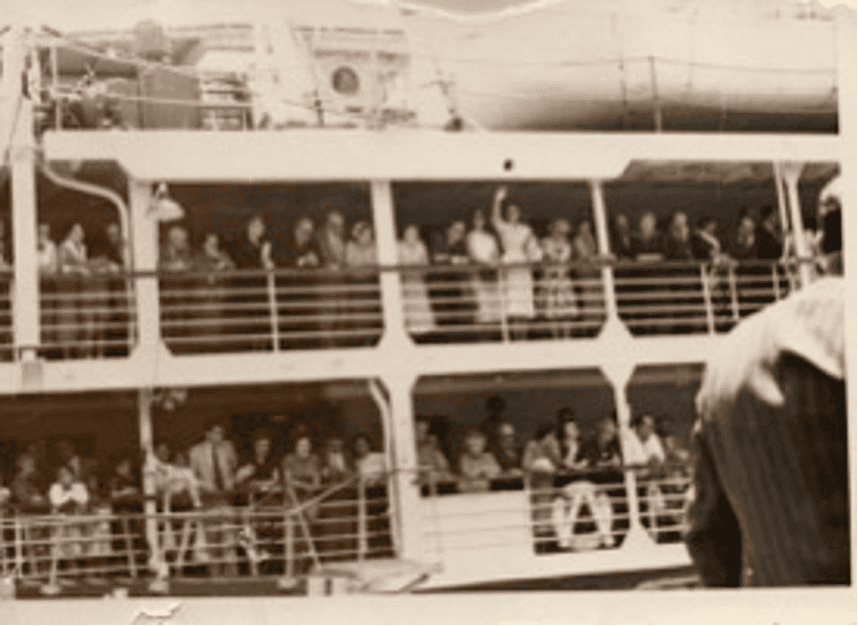
The gesture is solitary but resonant. We can almost hear a voice from the dock calling out, “Kathryn! Take care of yourself!” Studying the image, we take the place of a friend or loved one left behind, balancing the instinct to hold on with the quiet resolve to let her go, until the ship pulls away.
Kathryn’s excitement reaches us. She has set out for Italy. Reaching Rome’s closest harbor will take two to three weeks. There, she will transfer to a smaller ship that will carry her across the Mediterranean Sea to Tunis where she is expected. M’hamed Yazid and Abdelkader Chanderli at the National Liberation Front office in New York have advised their headquarters in Tunis of her impending arrival.
When she lands, she is greeted by a driver who takes her to the Ministry of Information, where the office of the department head is ready to welcome her. In the course of those meetings with officials, she becomes aware of the growing expectations surrounding her role as a journalist—expectations that feel overwhelming.
All I could think in the back of my mind was to hope that with all this opportunity suddenly dumped in my lap that I would be up to it and would be able to write some good articles and that they get published. If I don’t succeed, I’m going to feel like an awful fraud.… Here am I, Miss Absolutely Nothing, with two dinky little magazine articles and few newspaper scribblings to my credit, being ushered, with all the courtesy and consideration that a Pulitzer Prize winner might have a right to expect, on my first day in Tunisia, in the office of a cabinet minister who is ready to place at my disposal all the information facilities of the government.… I suddenly find myself in the middle of an ocean, so just have to learn to swim.4Kathryn Updegraff, “Letter to ‘Mes Tres Chers’ Written from Kathryn’s Hotel Room in Tunis, Tunisia,” August 17, 1957, Degraff/Updegraff Archive.
Kathryn’s trip coincided with a period in which the Algerian leadership, keenly aware of the need for international support, had decided to open the interior of the country to journalists from around the world. Kathryn later learned that four other Americans had been in Algeria at the same time, scattered across different battlegrounds. They never crossed paths—not even with the other American woman, photojournalist Dickey Chapelle from Wisconsin, who was stationed with the Scorpion Battalion in the Atlas Mountains. However, their photos and articles would suffer a similar fate. France, backed by the United States and other Western governments, were blocking information on the war in the Western press. The US public remained unaware of the major events taking place on the North African coast.
The French were passing the war off as simply protest demonstrations; the young Frenchmen who went to battle were told they would be doing their military service. As historian Raphaëlle Branche reveals in her book Papa, qu’as-tu fait en Algérie? (Dad, What Did You Do in Algeria?), many of these young men found themselves in a war they hadn’t expected, unprepared for the violence they would witness and enact.5Drawing on three hundred personal testimonies, Branche traces their shared journey and the heavy silence that followed—a silence not only personal but deeply embedded in families and French society at large, obscuring the true nature of the war for decades. Raphaëlle Branche, Papa, qu’as-tu fait en Algérie? Enquête sur un silence familial (Paris: La Découverte, 2020), doi.org/10.3917/dec.branc.2020.01. While the National Liberation Front had opened the country to foreign journalists—eager to have the right witnesses document their struggle—the French state remained a stronghold of colonial control that extended even to its own soldiers, who often didn’t realize they had been sent to war until they were already in the trenches.
Kathryn takes off as quickly as possible for the Tunisian Algerian border with three ALN soldiers. They stop at a rest camp, have lunch with the men stationed there, and learn that a French military unit has taken position on a hilltop overlooking the rest camp and the valley she and her unit would be crossing.
Kathryn and Youssef, an ALN intelligence officer who acts as her interpreter and bodyguard, drive to the border, which had not yet been electrified by the French. With the three soldiers, they cross by foot. They head for the headquarters of the Second Battalion of the Eastern Zone, where they rendezvous with the women’s medical unit. At the top of a ridge, they join the group of nurses and the captain of the Second Battalion, who is observing the unit of French troops across the valley. The captain estimates that the French do not plan to attack immediately.
Other soldiers and officers join the group. Dinner is eaten indoors at a long table with some civilian elders and irregulars who are anxious to meet the visiting US journalist. Sleep is on a large platform with a dozen other people. Kathryn is given extra straw and a blanket. The captain announces that they could take off their shoes since there is no danger of a surprise attack. The next day they discover that the French detachment has withdrawn during the night. Kathryn starts taking photos and conducting interviews.
The following day, Kathryn sets off with the medical unit for a day with refugees in need of help. They suffer from malaria, battle wounds, and physical injuries from beatings when their village was attacked and destroyed by the French army.
The next morning, their unit is hit by a French fighter plane, a random attack along the edge of the forest in which their section headquarters is located. Following the attack, the group sets out for another encampment. A clinic is installed. Kathryn photographs the nurses at work, looking after children and providing medicine and tending to wounds as needed.
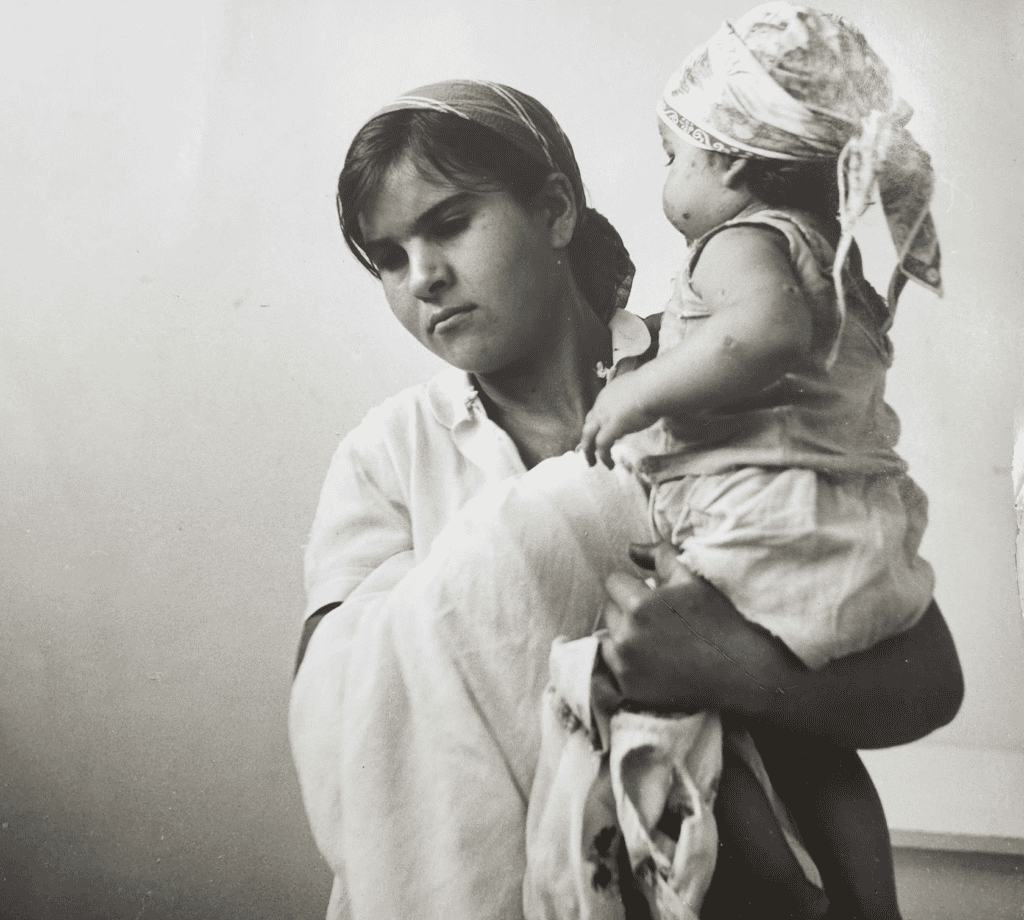
These villagers arrived several months previously and were housed in huts built for them by the army, just as Kathryn and the nurses are doing now. The hut the women are occupying is covered with soft green leaves beneath a layer of hay forming a rain shield or roof. The hut can sleep ten.
The following morning, Kathryn again takes off with the medical unit. They arrive at their destination after dark. The nurses prepare a dinner of flatbread on a stone slab. A local farmer offers them his house for the night. The family moves outside to sleep despite the nurses’ protests. During the night they hear gunfire in the distance.
In the morning, they receive a report on the French attack of the previous night. The enemy’s losses were heavy, whereas Algerian losses were slight. Youssef explains that ALN tactics call for spreading individual soldiers over a wide area while the French concentrate their troops. The French become a large-sized target, whereas the Algerians are widely dispersed individuals.
A community dinner follows the day’s clinic, and a young boy sings a ballad about the Second Battalion, performed especially for the American guest. Kathryn would long remember the sound of his voice breaking the stillness of the night.
On their return to battalion headquarters, they come under heavy attack. Search planes fly overhead in waves. The medical team takes cover under trees, remaining completely rigid. The trees become sparse in number. Youssef had explained that the planes fly so fast that their pilots can only detect movement.
While on the road, the group meets an ALN squad going in the opposite direction. Kathryn writes: “Next time planes come, I take cover. Squad keeps moving at fast pace, pays no attention to planes overhead. I marvel at their courage and nonchalance. Each time planes come, I ask myself if I am afraid. Since I found cover before planes reached me, I am not afraid. My major fear from the inception had been that I would be afraid. So far, have not had a moment of fear.”
After the planes pass, the unit reaches a farm surrounded by an orchard. There, the group reassembles—soldiers, nonmilitary fighters, and local peasants gather together. The nurses will stay the night, but Kathryn will continue on to Tunis. “We eat many fresh purple figs,” she recalls. “Then all say goodbye with hugs and kisses and many handshakes all around.” On the way out of the mountains, Kathryn experiences the direct attack that opens this essay. On the road to Tunis, French military trucks pass the retreating unit on the road. Kathryn, Youssef, the other soldiers, and the mule used to transport Kathryn from time to time all shelter in the lower-level field below the road by lying as flat and still as possible.6Kathryn Updegraff, “Descent from the Maquis,” 1957, Degraff/Updegraff Archive, 6.
Decades later, in her private archive held by family after her death in 2018, Kathryn’s memories are found inside a small envelope marked Algeria — 1957 in elegant cursive. Inside is a set of delicate 2×2-inch photographs. At first glance, the images seem loosely organized, but their consistent size and tone suggest they belong to the same visual series—a kind of informal diary. Tucked inside the envelope is a folded caption list, beginning with the phrase “From left to right,” followed by seventeen numbered entries. Although the photographs are out of order and some captions do not clearly match, the pieces gradually fall into place. What emerges is a compelling visual narrative: moments of waiting, training, laughter, and quiet resolve, as Kathryn and her companions offer aid to combatants and civilians alike.
The first image in the series shows two women, Akila and Hadja—both registered nurses and combatants in the ALN’s medical unit—emerging from a timber-and-straw shelter known as a groubi. Kathryn was stationed with them in the maquis. At the time the photo was taken, Akila had been serving for a year, while Hadja had been in the mountains for only three months. These makeshift shelters offered brief respite for eating and rest before the women resumed their duties.
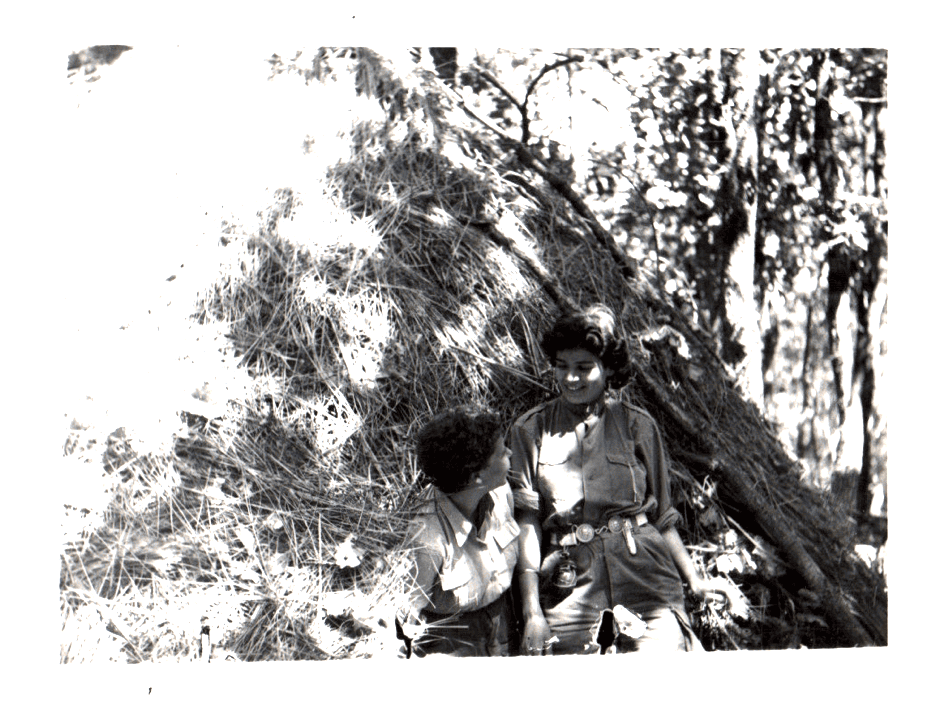
Although not visible in the image, the gourbi itself was likely constructed by a network of local women who supported the fighters behind the scenes. One such woman, Aicha Kemmas—who joined the resistance at age forty-four—recalled this covert labor in an oral history: “Sometimes we prepared food all night for the moudjahidines, the women fighters. At night they slept, and we kept watch over them.”7Danièle Djamila Amrane-Minne and Farida Abu-Haidar, “Women and Politics in Algeria from the War of Independence to Our Day,” Research in African Literatures 30, no. 3 (1999): 63, doi.org/10.2979/RAL.1999.30.3.62. More than a moment of rest, Kathryn’s image captures a layered politics of resistance—where women’s labor, both visible and concealed, formed the backbone of a revolutionary struggle too often narrated without them.
While Aicha and others remain outside the frame, the photograph captures an intimate moment between Akila, described by Kathryn as her closest comrade, and Hadja, whose youthful grin reveals the ease of their friendship. Both wear standard military fatigues, but Hadja’s belt—adorned with a miniature hand grenade and pocketknife—hints at the layered responsibilities they carried. These were women who were expected to both heal and fight. In this quiet scene, they appear calm, even joyful, and their sense of security is rooted in the strength of the community around them—one that includes Kathryn, who stood behind the camera.
Another photograph in the envelope captures Kathryn in front of the lens. Appearing in the scene herself, she set up the shot on a nearby hill and joined Hadja, who is shown teaching her how to handle a grenade. The image underscores a moment of shared instruction and trust. Kathryn’s attentive posture and Hadja’s patient guidance speak to the reciprocal learning and solidarity that defined the women’s relationships in the maquis. By emphasizing this exchange, Kathryn’s photograph challenges dominant visual narratives of wartime heroism—those focused solely on combat—and instead foregrounds everyday acts of care and collaboration. In centering Hadja as a skilled instructor, the image also rejects colonial and patriarchal representations of Algerian women as merely symbolic.
![Kathryn Updegraff, Hadja showing me [Kathryn] how a hand grenade is held, August 1957, The Degraff/Updegraff Archive.](https://staging.spectrejournal.com/wp-content/uploads/2026/06/algeria-5.png)
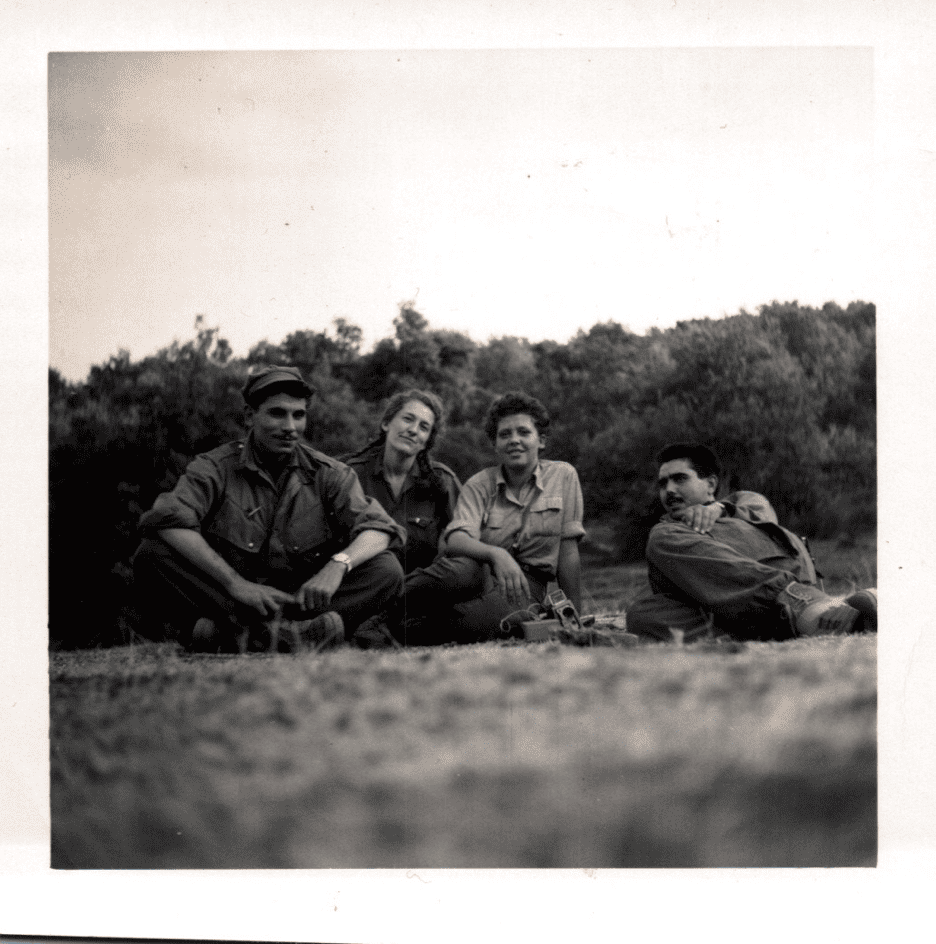
Another photograph from the series reveals a lighter moment: Kathryn, Akila, Lakhdar, and Youssef sit together in a sunlit clearing, waiting for a bazooka demonstration. Surrounded by green vegetation and rugged landscape, they appear at ease. Kathryn leans in toward Akila with a warm smile; Lakhdar sits cross-legged; Youssef reclines with casual confidence. While their uniforms and concealed gear remind us of the context of war, the atmosphere is one of trust and quiet solidarity, shaped by long days of shared work and risk.
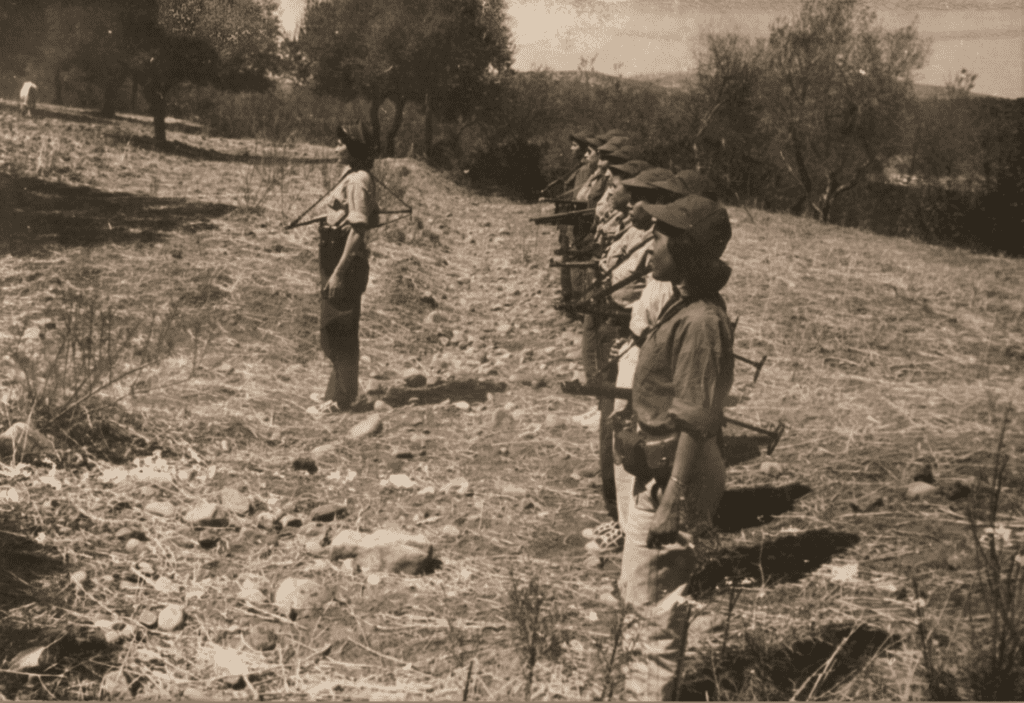
If any images capture the essence of a revolution powered by women, it’s the last two in the envelope. In one, we see a line of women in military uniform behind a woman officer. This is a side view. The last photo is of the same group of women in uniform behind the same woman officer seen from the front. They require no commentary.
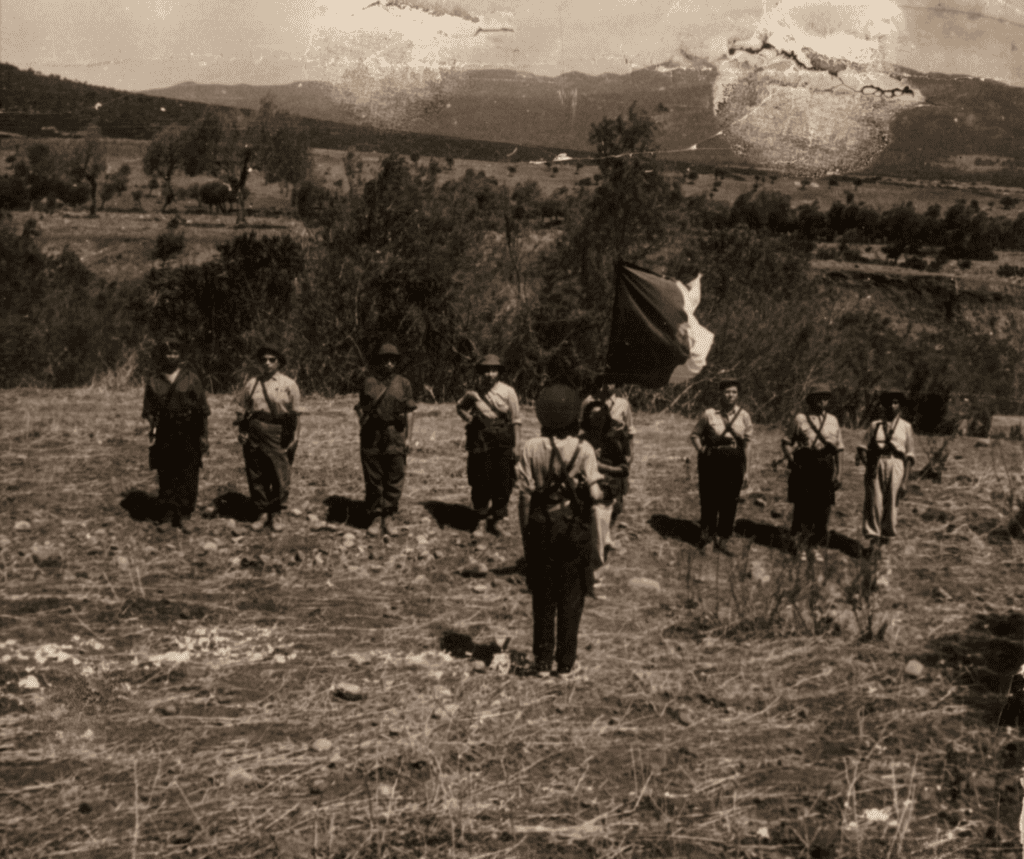
After her seven days are up, marking her return to Istanbul to teach, Kathryn does not return to the maquis but makes the trip to Tunis on her vacations to give classes in English to Algerian students denied entry into French universities.
Kathryn was in Tunisia in 1958 when France bombed the village of Sakiet Sidi Youssef on the outskirts of Tunis, inflicting much damage and killing many innocent victims, including children in a primary school. The attack was a warning to recently independent Tunisia for its fostering of Algerian independence. Kathryn was particularly active in reporting on Tunisian radio about the horror and aftermath of the events.
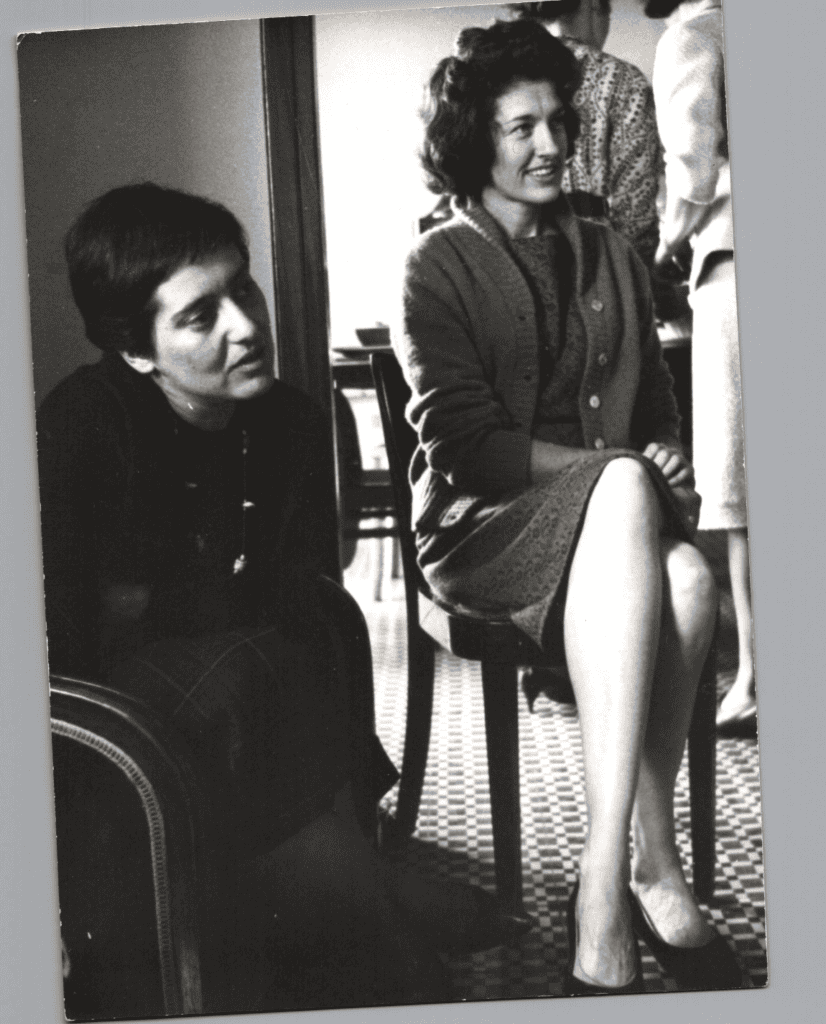
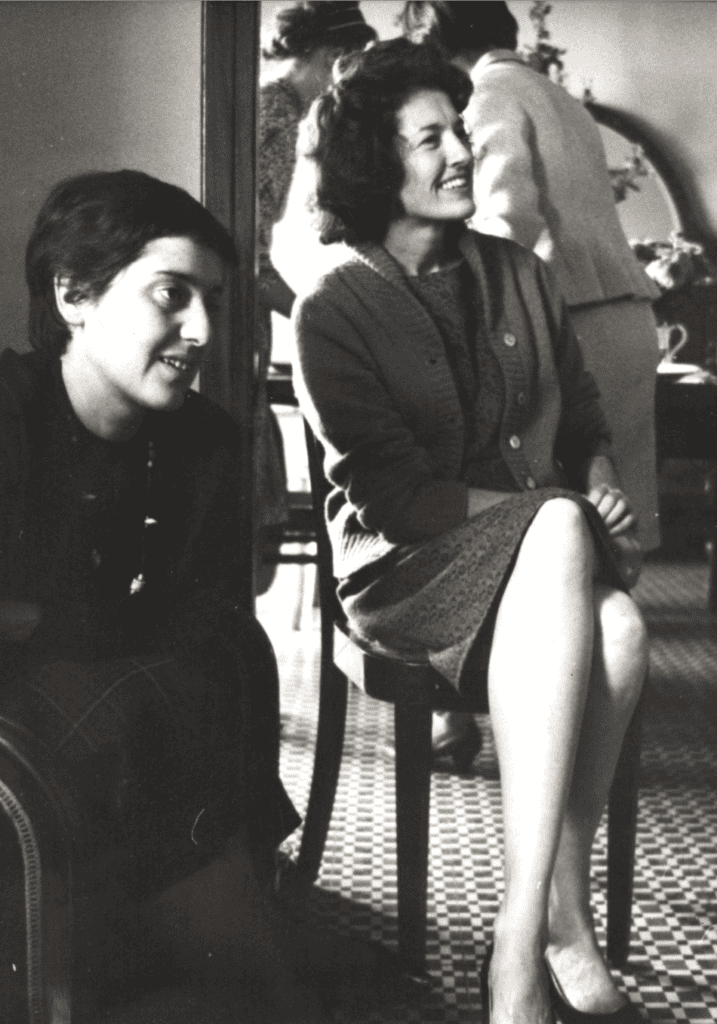
On her return to the United States, Kathryn, ever deeply concerned with the cause of Algerian independence, continues to volunteer at the Algerian Office in New York. She joins several speaker units and gives talks wherever possible on the dramas of colonialism and the struggle for independence in Algeria, emphasizing her own visual experience with the records of her time in the maquis. It is in that office that Elaine Mokhtefi and Kathryn met and became lifelong friends.
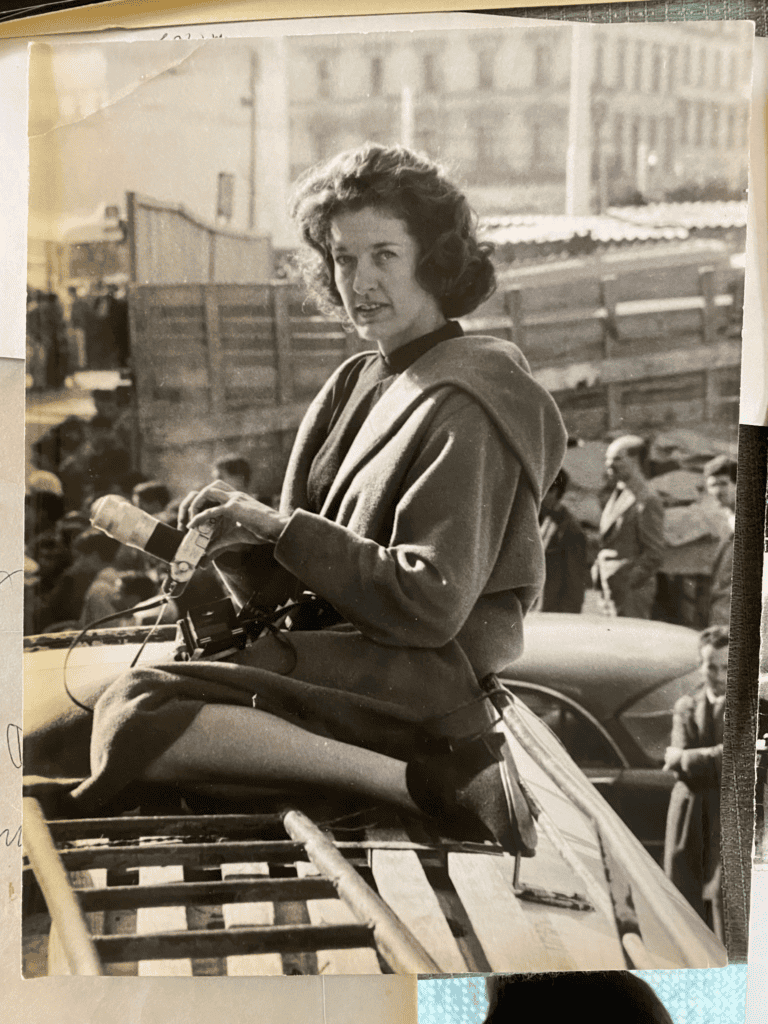
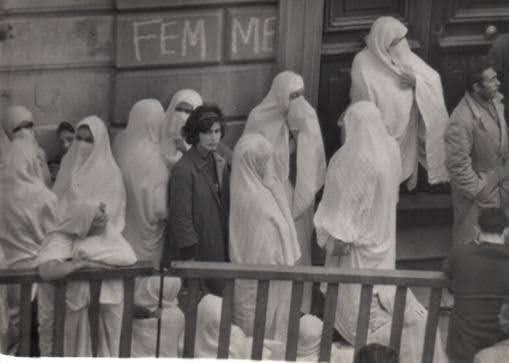
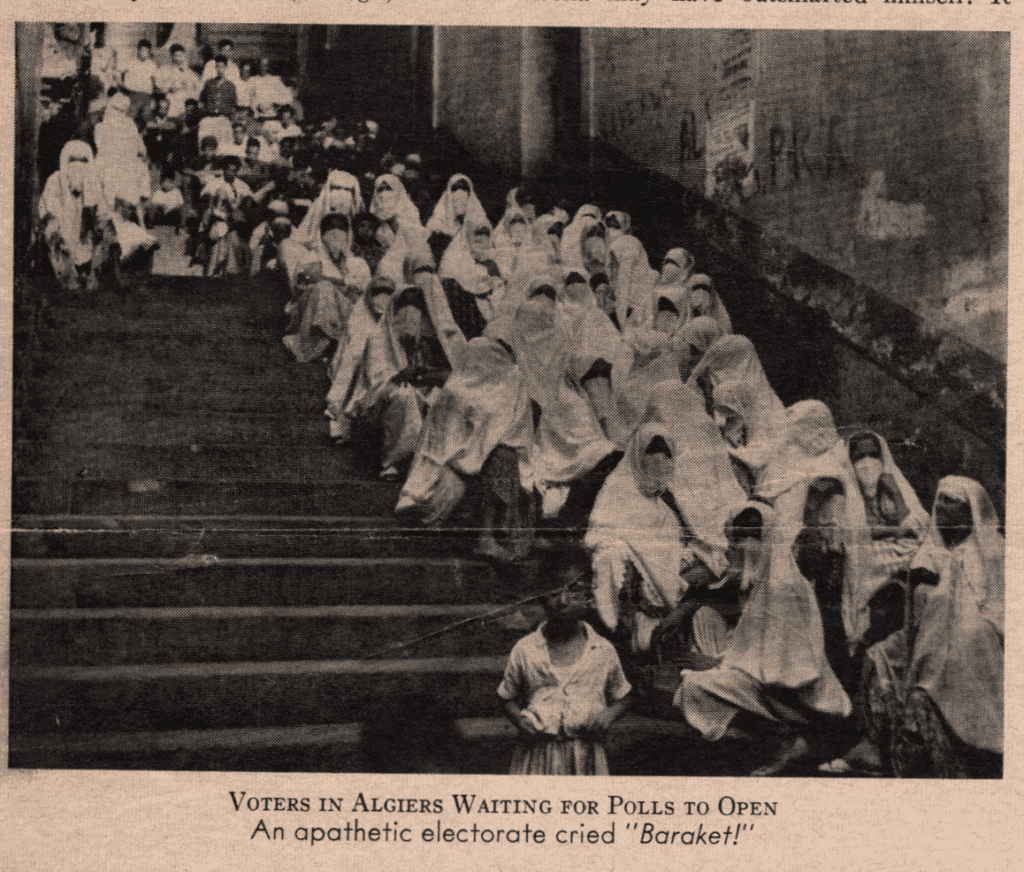
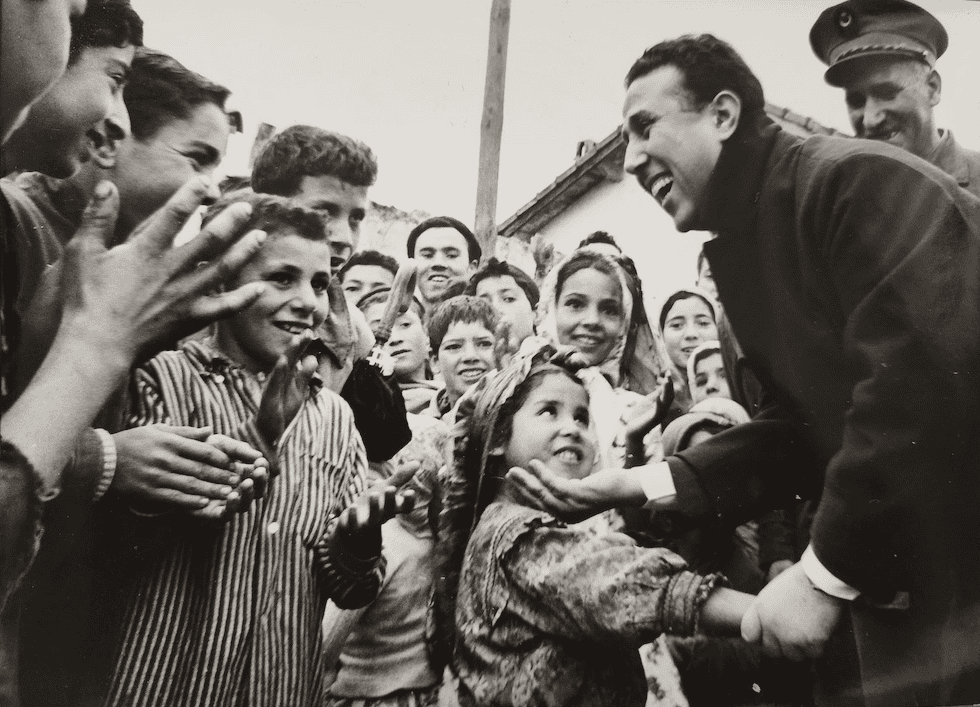
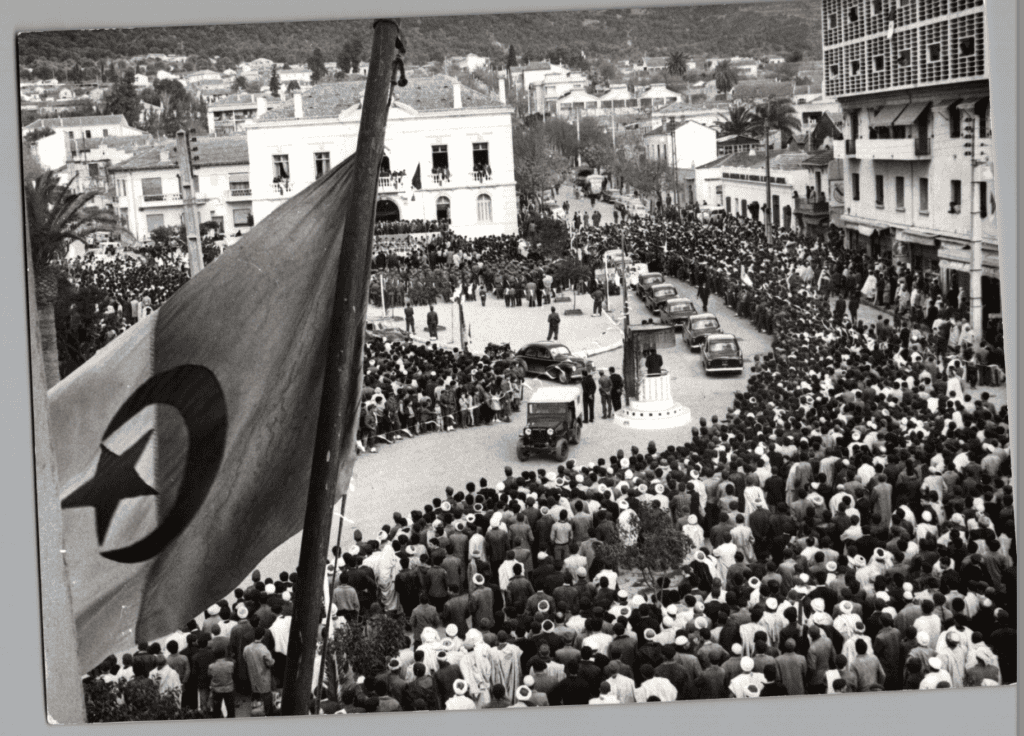
In September 1962, Kathryn picks up her photo equipment once again and sets off for Algeria. Kathryn and Elaine meet in Algiers and share an apartment. Kathryn does a magnificent series of photos of the first waves of joy of freedom: the first views of Algerian women voting, one of which is published in TIME magazine; President Ahmed Ben Bella greeting people in the street; and the national flag aloft! The two friends celebrate the events surrounding Algerian independence together in Algiers.
Elaine visited Kathryn in California for the last time shortly before her death in 2018. Her memory was slipping but she readily admitted that she had had an exceptional life. Indeed…