
“Gender Ideology,” Bodily Mutilation, and End of the Masculine West
February 17, 2026
From the fascist vantage, the organic crisis,” writes Alberto Toscano, “is always a crisis of the organic.”1Alberto Toscano, Late Fascism: Race, Capitalism and the Politics of the Crisis (New York: Verso, 2023), 98.
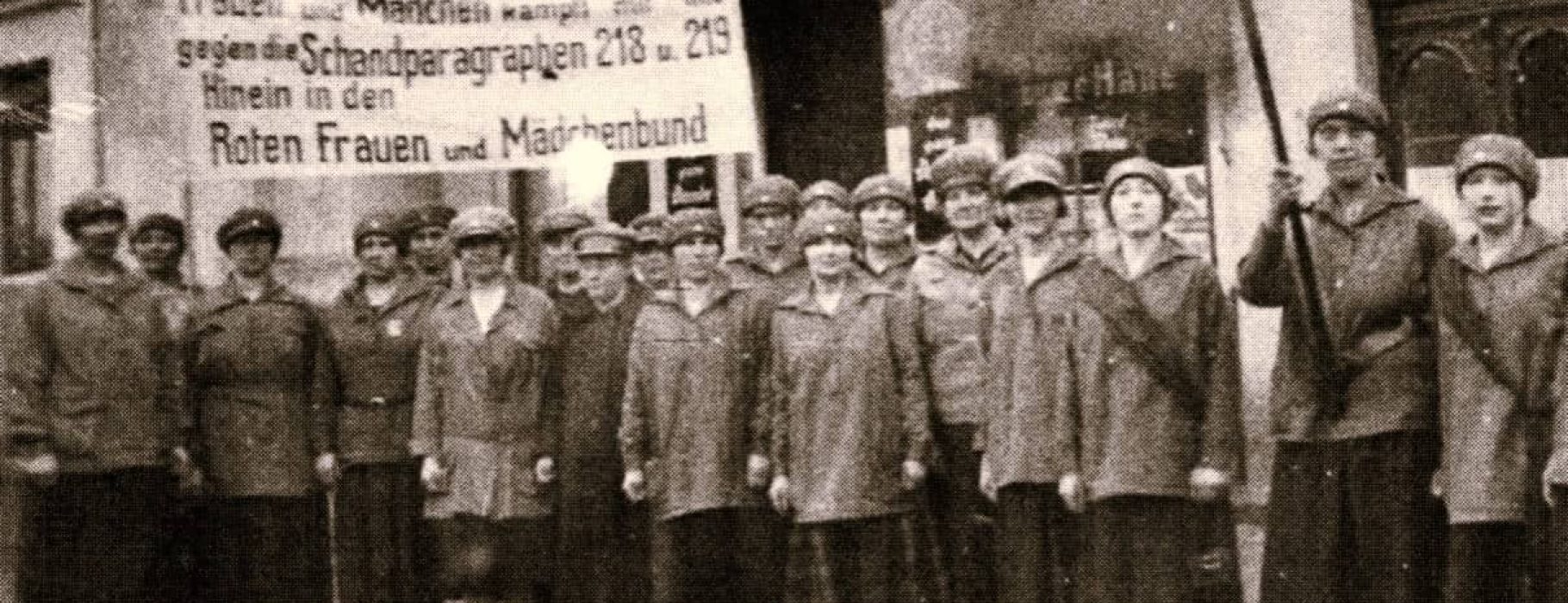
In 1986, sociologist Klaus Theweleit released Male Fantasies, his seminal study of the psychic lives of the interwar Freikorps.2Klaus Theweleit, Male Fantasies: Volume 1: Women, Floods, Body, History (Minneapolis: University of Minnesota Press, 1987). He discovered in their testimonials a deep-seated fear of the abstracted figure of the “red woman”—a brash, ugly, and violent woman masculinized through her class position and communist affiliation. They feared that these “proletarian whores” hid guns under their skirts (a fear Theweleit identified as obviously phallic) and would castrate the unwary among them. According to Theweleit, “the men experience communism as a direct assault on their genitals.”3Theweleit, Male Fantasies, 71. Far more than the actual threat of communism or the realities of what empowered, self-determining women might be up to, an eros of loss was at the heart of far-right masculine fears.
Unlike in the interwar period, communism in 2025 no longer represents an organized global force—even as the modern right seems desperate to summon its ghost. While vestigial anticommunism remains for both the modern right and the liberal center, they have conjured new phantoms with which to battle. For Toscano, transphobia (or in the fascist vernacular, the struggle against gender ideology) along with the Great Replacement theory, links together various formations of the far right across borders, becoming a “universal language.” Richard Seymour calls the struggle against “gender ideology” the symbolic glue holding together the disparate global far-right coalition, citing the effective banning of the topic in Hungary, Romania, and Brazil under Jair Bolsonaro, as well as a regular boogeyman conjured by far-right politicians like former Polish president Andrzej Duda, Giorgia Meloni, and of course, Donald Trump.
Much popular discourse on the left sees transphobia as a cynical “culture war” distraction meant to divert attention from their real project of unpopular austerity. This position is argued for most cogently by Kay Gabriel in her essay “Inventing the Crisis.”4Kay Gabriel, “Inventing the Crisis: The anti-trans panic and the crusade against teachers,” n+1, no. 47 (2024): https://www.nplusonemag.com/issue-47/politics/inventing-the-crisis/. The wager here is that the millions caught up in a transphobic frenzy are manipulated into something they do not really desire, or would not if they only knew better. The value in such interventions is that they provide provisional strategies for countering a right-wing “culture war” offensive, but fail to elucidate the deep libidinal draw of transphobia evident in its enthusiastic participants.
In Barbara Ehrenreich’s introduction to Male Fantasies, she prompts us to reject a theory of fascism as just false consciousness.5Barbara Ehrenreich, introduction to Male Fantasies (Minneapolis: University of Minnesota Press, 1987). Nor does fascism arise purely from the outside, as the rational result of specific capitalist conjuncture, which, in the vulgar materialist sense, is artificially separated from the psychic lives of its participants. It also isn’t an internally generated crisis singularly stemming from an unsuccessful revolutionary movement. Ehrenreich argues that when a Freikorps man kills, he is not “doing something else,” but exactly what he wants to do—not because he is an unwitting fool lured in by a clever charlatan, but because the act of murder resolves something within his own desire that could not otherwise be sated. Even before the act of murder, fascism in particular historical conjunctures is something actively desired by the masses, even when it appears to be contrary to their seemingly objective class interests. But class interest, according to Gilles Deleuze, instead “follows and finds itself where desire has placed it.” In other words, “the masses were not deceived; at a particular time, they actually wanted a fascist regime.”6Gilles Deleuze and Michel Foucault, “Intellectuals and Power,” in Language, Counter-Memory, Practice: Selected Essays and Interviews, ed. Donald F. Bouchard (Ithaca: Cornell University Press, 1977), 215, available at https://libcom.org/article/intellectuals-and-power-conversation-between-michel-foucault-and-gilles-deleuze.
The desire to draw out simple universal truths from interwar fascist violence is one that should be interrogated; as Ehrenreich reminds us, it can be a means of obviating confrontation with the horror that we are faced with. Still, Theweleit’s study of the Freikorps helps us begin to understand the psychic lives of the far right today. It prompts us to question what the desire for violent national renewal through suppression of “gender ideology” resolves for the movement’s growing numbers. From our conjunctural vantage, what if we treated the ferocious transphobia from the right—the ceaseless misgendering, murderous fantasies, and ever increasing violence—as a discourse both leaders and rank-and-file participants actively desire to be part of? Despite its conventionalized and trite usage, Atlantic writer Adam Serwer’s aphorism that “the cruelty is the point” remains true.7Adam Serwer, “The Cruelty is the Point,” Atlantic, October 3, 2018, https://www.theatlantic.com/ideas/archive/2018/10/the-cruelty-is-the-point/572104/. It then remains our task to explore the how and why of this will to transphobic cruelty. Doing so is in fact necessary if the left is to find the means appropriate and indeed required to defeat it.
Gender ideology,” like communism, represents a breakdown of social order and, concurrently, of the seamlessly integrated, harmonious body itself. Likewise, the symbolic figure of the red woman shares a striking resemblance to the abstracted image of trans women in the psychic flights of the right: a masculine, radical, and violent woman who represents the threat of both figurative castration, the destruction of the privileges of white patriarchal class society, and literal removal of the phallus. In other words, much like the red woman, trans women are both the cause and corporal symptom of the organic crisis, then experienced by the fascists as a crisis of the organic.
According to Toscano, the organic crisis is always a crisis of the organic in which planetary disorder—for the MAGA right, the loss of the US “warrior ethos,” shifting social expectations for men and women, decline in the social role of the patriarchal family, and the feared (also fantasized) destruction of Western civilization at the hands of migrants and gender deviants—is projected onto “unruly bodies.”8Toscano, Late Fascism, 99. A rather explicit demonstration of this dynamic is in the executive order “Prioritizing Military Excellence and Readiness,” which bans trans people from the US military, speaking of an armed forces “afflicted with radical gender ideology” that is anathema to the army’s commitment to “physical and mental health, selflessness, and unit cohesion.”9Exec. Order 14183, 90 Fed. Reg. 8757 (January 27, 2025), available at https://www.federalregister.gov/documents/2025/02/03/2025-02178/prioritizing-military-excellence-and-readiness. Following this executive order, Pete Hegseth has railed against “gender delusion” and “dudes in dresses” in the military, which, along with “fat troops,” “long hair,” and “superficial individual expression,” symbolically represent and are thought to be the direct cause of the United States’s lost martial masculinity.10Robert Tait, “No more ‘woke’ in the military: key takeaways from Pete Hegseth’s speech,” Guardian, September 30, 2025, https://www.theguardian.com/us-news/2025/sep/30/pete-hegseth-speech-takeaways.
The figure of the Freikorps’ castrating red woman, imagined in a period with a strong labor movement and actually existing communist politics, cannot be transposed directly onto our conjuncture. However, if, as Toscano argues, that the particular boogeyman—proletarian, female, communist, and Jewish—conjured by the fascists back then reveals how they map the organic crisis of capitalism onto specific bodies (and implicitly their own), what might their modern phantoms elucidate about the far right today? “Gender ideology,” like communism, represents a breakdown of social order and, concurrently, of the seamlessly integrated, harmonious body itself. Likewise, the symbolic figure of the red woman shares a striking resemblance to the abstracted image of trans women in the psychic flights of the right: a masculine, radical, and violent woman who represents the threat of both figurative castration, the destruction of the privileges of white patriarchal class society, and literal removal of the phallus. In other words, much like the red woman, trans women are both the cause and corporal symptom of the organic crisis, then experienced by the fascists as a crisis of the organic.
Elon Musk has articulated this animating complex in the most explicit way possible—tweeting that gender affirming care “means castration.” In a 2024 interview with Jordan Peterson, Musk referred to healthcare for trans youth as “child mutilation and sterilization.” He railed how the “woke mind virus” had killed his “son,” his trans daughter Vivian Jenna Wilson, who later confirmed Musk had paid for sex-selective in vitro fertilization in order to have a male child.11Anthony Robledo, “Musk says estranged child’s gender-affirming care sparked fight against ‘woke mind virus,’” USA Today, July 22, 2024, updated July 29, 2024, https://www.usatoday.com/story/tech/2024/07/22/elon-musk-jordan-peterson-interview/74506785007/; James Factora, “Elon Musk’s Trans Daughter Vivian Jenna Wilson Says Her Assigned Sex at Birth Was ‘Bought and Paid for,’” Them, March 10, 2025, https://www.them.us/story/vivian-jenna-wilson-elon-musk-sex-selective-ivf-grimes-blue-sky-implied. Peterson offered his condolences to Musk and to the other parents of “demolished children.” Here, the fear of transness, and trans femininity in particular, is articulated as a viral threat, both global and immensely personal, to the body’s integrity, to the patriarchal family, and to a father’s control over his son. From the father’s vantage, the son, as a symbolic representation of his own virility and phallic integrity, is particularly vulnerable to the virus of trans femininity. According to Pinko editor Max Fox, the trans child forces the family to confront the reality of children as a “concept beyond their control.”12Max Fox, “The Traffic in Children,” Parapraxis, no. 1 (December 2022): https://www.parapraxismagazine.com/articles/the-traffic-in-children. By choosing to transition then, the trans female child sterilizes and mutilates the father as well.
The word mutilation is repeated regularly by prominent MAGA figures. In 2022, conservative media charlatan Matt Walsh hosted a rally outside the Illinois state capitol headlined by Tulsi Gabbard to end “child mutilation.” In 2024, Republican Utah Governor Spencer Cox referred to gender affirming care as “genital mutilation surgery.”13Bryan Schott and Emily Anderson Stern, “Utah Gov. Cox calls gender-affirming care ‘genital mutilation surgery’ during ‘Disagree Better’ event,” Salt Lake Tribune, February 22, 2024, https://www.sltrib.com/news/politics/2024/02/22/utah-gov-cox-calls-gender/. The dramatic title of the executive order banning care to all trans people under 19 is “Protecting Children from Chemical and Surgical Mutilation.”14Exec. Order 14187, 90 Fed. Reg. 8771, January 28, 2025, available at https://www.federalregister.gov/documents/2025/02/03/2025-02194/protecting-children-from-chemical-and-surgical-mutilation. Most recently, Majorie Taylor Greene’s bill, which at the time of writing has passed the House, amends the US penal code to classify providing gender affirming care to minors as “genital and bodily mutilation and chemical castration.” As with the Freikorps, the fear of social upheaval, gender nonconformity, and bodily dissolution are merged together. The transphobic far right experiences gender ideology as a direct assault on their genitals. The mere existence of trans women in particular then becomes a psychosocial cum sexual, existential threat. Another Trump executive order, “Defending Women from Gender Ideology Extremism and Restoring Biological Truth to the Federal Government,” rejects “the false claim that males can identify as and thus become women and vice versa.”15Exec. Order 14168, 90 Fed. Reg. 8615, January, 20, 2025, available at https://www.federalregister.gov/documents/2025/01/30/2025-02090/defending-women-from-gender-ideology-extremism-and-restoring-biological-truth-to-the-federal. As is often the case, the target is trans women, while trans masculinity is relegated to an afterthought. Many feminist scholars have problematized this vague understanding of “biology,” which gestures at a deliberately ignorant understanding of sex rather than contend with its real biological and social complexity, but misses what this simplistic rationalization resolves libidinally. No careful amount of biological or social explanation will get to the heart of far-right anxieties and how they are prompted, navigated, and sustained by fascist commitments.
The palpable terror of trans femininity underlying these executive orders comes from the fact that, empirically, men can and do become women through a series of medical treatments that change both primary and secondary sex characteristics. The more this transition happens and is socially affirmed, the more likely it is to happen again. Transition is thus a virus that upends the gendered social order, and mutilates by proxy. Also, despite the delusional belief of the right that “we can always tell,” it is undoubtedly true that they often get it wrong. It is this fear of being “tricked”—to come dangerously close to the avatar of castration—that motivates the frantic online “transvestigation” of even cis women, from Taylor Swift to Brigitte Macron.
The most obvious solution to this fear is to discursively disavow transness with the levers of state power and severely curtail access to medical transition. This is perhaps a sublimation of an even more violent desire. Theweleit reports that when the Freikorps were faced with the physical manifestation of bodily dissolution, either the “bloody mass” of left-wing demonstrators or the aforementioned red woman, they would shoot it. They would kill and then laugh, since they had successfully exorcised the monster. In the case of the red woman, Ehrenreich reports that through the act of penetration by bullet or knife, the fascist comes “thrillingly close to her and the horror of dissolution.”
Toscano’s “unruly bodies” are both the symbolic representation of the crises of masculinity, the patriarchal family, US imperial power, and Western civilization, as well as a deeply personal terror of bodily transition. “The decline of the west,” he writes, “is gender trouble.”
Much like the Freikorps men’s frequent descriptions of the red woman in explicitly erotic terms, the fear of the “trap” today is also a libidinal fixation. This is evidenced in the progressively growing popularity of trans pornography—now according to Pornhub the seventh most popular category in the world (though still behind teen and MILF). If online porn is where the dangers of transgressive erotic fantasies are more safely explored, it would then amount to a window into the pyschoerotic tendencies of increasingly far-right fever dreams.
In the canonical story of the trap, a heterosexual man unwittingly sleeps with a trans woman only to realize she is actually a mutilated man. He finds evidence of her hidden penis, which drives him into a righteous fury. He disavows his own fear of castration, and potential homosexuality, by killing her—a trope that is tragically acted out too often in reality. After he kills her, unlike the Freikorps soldier, he does not need to laugh, as tens of thousands on the Internet will do it for him. Sometimes, as in the case of the massive troll farms that exist primarily to cyberbully prominent trans people into committing suicide, the laughter serves as another means of fascist murder. As Seymour writes, “nationalists have always killed to protect themselves from their sexual fantasies.”16Richard Seymour, Disaster Nationalism: The Downfall of Liberal Civilization (New York: Verso, 2025), 82.
Violence and cruel laughter as a means of restoring the body’s biological integrity is unfortunately not exclusive to men. J. K. Rowling, now an explicit supporter of Trump’s actions against trans people, wrote in 2020: “I refuse to bow down to a movement that I believe is doing demonstrable harm in seeking to erode ‘woman’ as a political and biological class.”17Adam Wallis, “J. K. Rowling doubles down on transphobic comments, reveals she’s an abuse survivor,” Global News, June 11, 2020, updated May 27, 2025, https://globalnews.ca/news/7053461/j-k-rowling-statement-transgender-comments-sexual-assault-survivor/. In the United States, after tweeting 326 times in seventy-two hours about Sarah McBride, MAGA republican Nancy Mace marked a women’s restroom sign in the Capitol to read “biological women,” and successfully pressured GOP House leadership to change the bathroom rules to exclude a single trans woman.18Monica Sager, “Nancy Mace Has Posted 326 Times in Last 72 Hours About Bathrooms,” Newsweek, November 21, 2024, https://www.newsweek.com/nancy-mace-social-media-post-transgender-bathroom-1989530; Samantha Riedel, “Nation’s Top Toilet Cop at it Again: GOP Rep Nancy Mace Posting Pics Outside Bathroom,” Them, May 8, 2025, https://www.them.us/story/nancy-mace-bathroom-photos-congresswoman-representative. The invocation of the word biological here is particularly revealing.
It is participation in the sadistic and titillating public cruelty toward trans women that also reaffirms the bodily integrity of the cis woman, per Rowling and Mace, against the erosion of “biological” women. At the same time, it reifies an exclusionary femaleness characterized by vulnerability, irresolvable pain, and inescapable patriarchal domination. In her essay “TERF Island,” Sophie Lewis describes the animating sentiment behind transphobic feminism as: “a real woman is in pain from birth to death, a pain that will define her identity as female.”19Sophie Lewis, “TERF Island,” Lux, no. 11/12 (Fall 2024): https://lux-magazine.com/article/terf-island/. Womanhood, for both the TERF and the antitrans traditionalist, is biological damnation. Yet this damnation also defines the border of the body against the terrifying specters of upheaval and dissolution.
The Italian theorist Franco “Bifo” Beradi once speculated that fascism is a “pathology of identity” based in a fear of identity’s changeable and multifaceted nature. Like identity, our physical bodies are in a state of constant transition, and our own sex characteristics, along with their social significance, are dangerously insecure. Toscano’s “unruly bodies” are both the symbolic representation of the crises of masculinity, the patriarchal family, US imperial power, and Western civilization, as well as a deeply personal terror of bodily transition. “The decline of the west,” he writes, “is gender trouble.”20Toscano, Late Fascism, 99.
Understanding the powerful libidinal pleasures that fascist cruelty and violence offers provides those of us committed to social revolution with a more effective starting point to ask how to inoculate against fascist desire. Yet, we must be careful to not universalize a contingent psychic process. Certainly, the far right’s libidinal appeal does not resonate equally across positionalities under white patriarchal class society—although, as the MAGA movement shows, transphobia appears to have growing cross-race and cross-class appeal. Desire for fascism, and its component transphobic and racist violence, is just one possible resolution to the social crises experienced as a crisis of the organic.
In the final paragraph of her introduction to Theweleit’s book, Ehrenreich writes that in the study of the Freikorps fantasies, we also get a glimpse of something else: a truly sublime vision of the barriers between genders and classes breaking down. This is a “ joyous commingling, as disorderly as life”—then (and still) found in communism and in today’s so-called gender ideology—that terrifies the fascists.
The discursive move from transition as terrifying mutilation to something joyous can be found in the work of biologist and trans social theorist Julia Serrano. In Whipping Girl, she writes provocatively that her desire for sexual reassignment surgery has nothing to do with her penis. Rather than adhere to a ubiquitous discourse that describes transition, particularly male-to-female sex changes, in entirely negative terms (cutting off, castrating, and so on), Serrano describes her positive desire for a vagina and to be sexed female.21Julia Serrano, Whipping Girl: A Transexual Woman on Sexism and the Scapegoating of Feminity (New York: Seal Press, 2016). This reconceptualization resolves the fear of figurative and literal castration by discursively decentering the phallus and reeducating one’s desire to orient toward the joyful, perhaps even utopian, aspirations of bodily transition in any modality.
This is not to claim that transness itself is revolutionary, as such an analysis can only end in liberal individualism. Rather, on a micro level, if fascist transphobia is the violent response to the terror of the organic crisis and crisis of the organic, transition is recognition of its liberating possibilities.