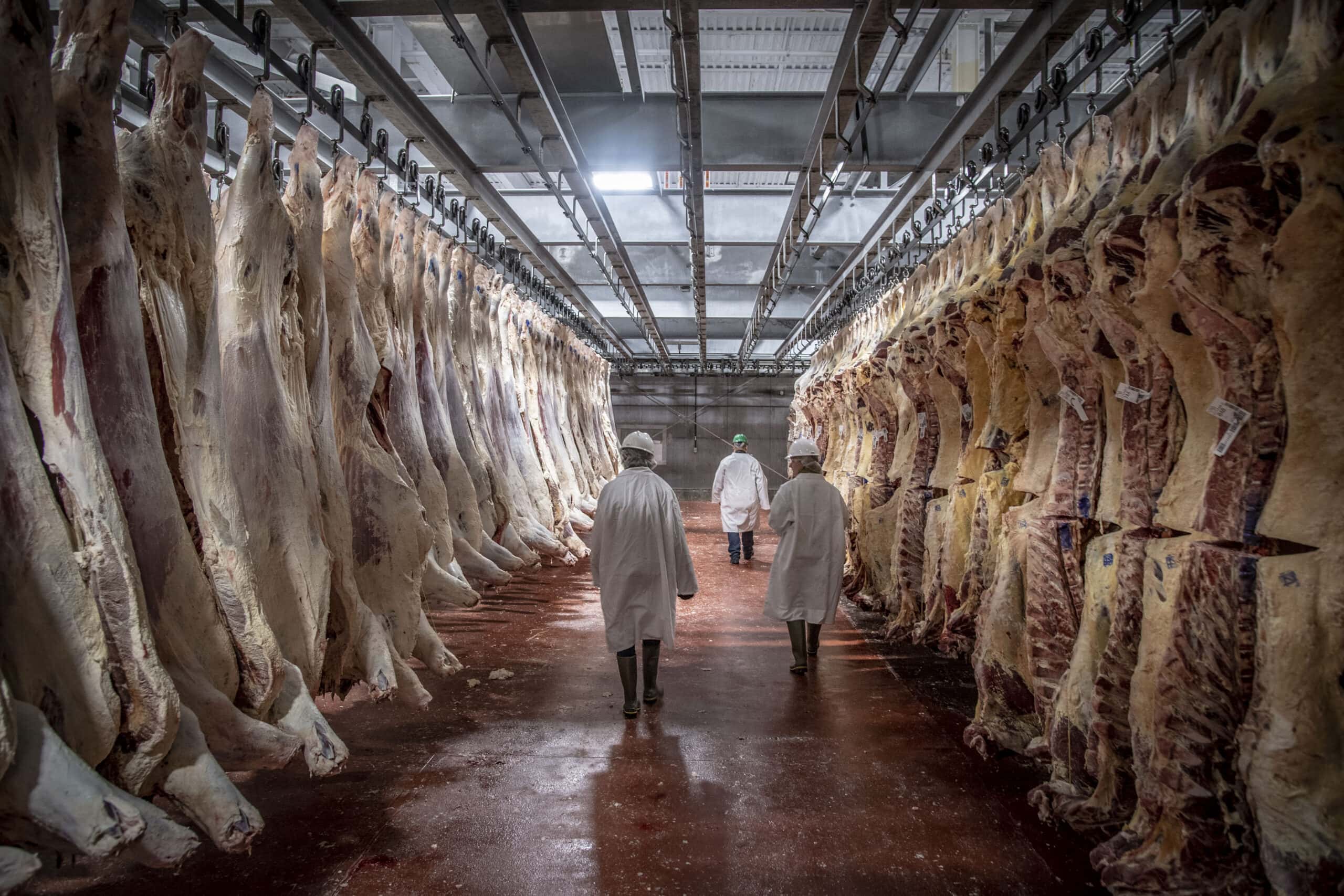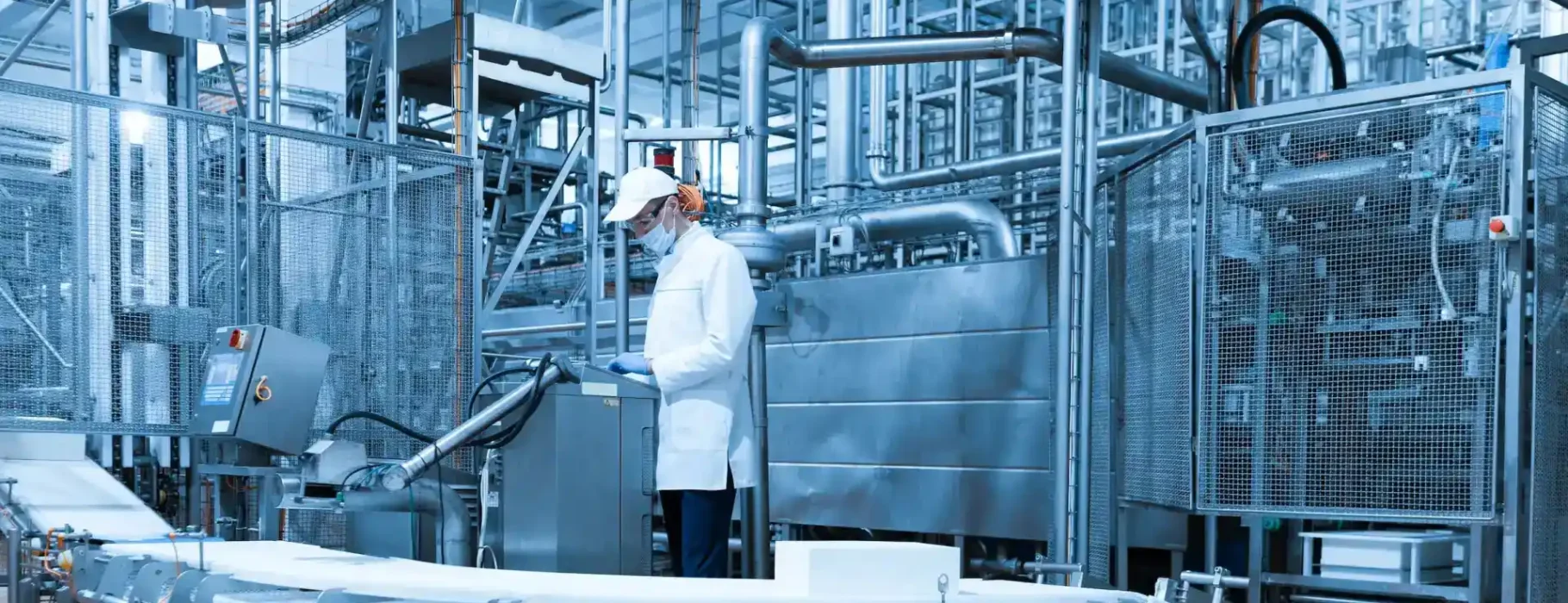
Smithfield Foods is the world’s third-largest pork producer. Its processing facility in Tar Heel, North Carolina, is the largest in the world—a collection of parking lots, slurry lagoons, and a million square feet of buildings spread over 880 acres along an unremarkable stretch of Highway 87, twenty miles south of Fayetteville. Its heavily automated disassembly lines slaughter thirty-five thousand hogs every day and turn out two billion pounds of pork every year. An immense assemblage of computer vision systems, AI-assisted robots, and “smart” conveyors splits carcasses, pulls ribs, and trims bellies with inhuman speed and precision. In 2013, Smithfield changed hands: the Luter family of southern Virginia handed over their century-old, “all-American” enterprise to WH Group, the Chinese food-processing company led by Wan Long, a billionaire from Henan and a pioneer of his own country’s pork industry. Eight years later, a father-son feud tore through WH Group’s succession plan, briefly rattling the global meat industry and the firm’s stock value alike.
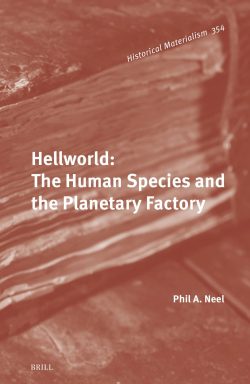
The Introduction to Phil A. Neel’s Hellworld tells this story as an allegory of the transformations it seeks to decipher—“the apparent decline of the US, the apparent rise of China, the apparently all-encompassing power of capitalism over our lives.”1Phil A. Neel, Hellworld: The Human Species and the Planetary Factory (Leiden: Brill, 2026), xx. Yet, as the qualifier attests, these are merely historically specific forms of appearance of capital’s expansionary drive as a “form of social organization…wherein masses of material and billions of bodies are made to accord with supervening imperatives set by an overarching ‘logic’ operating at an emergent level of agency, beyond the control of even the most powerful individuals who embody it.”2Neel, Hellworld, xxi. At a more fundamental level, Smithfield’s gargantuan hog factory is a metaphor made flesh: proof of capital’s strange power to bend countless life processes to a “logic” that seems to run on its own. Hellworld takes us on a journey into the alien—and alienated—world wrought by capital: into the bowels of its technical apparatus, the “planet-strangling horror of fixed capital” that exerts a despotic power over the conditions of human existence.
Neel has been tarrying with this horror for several years. An economic geographer by training, his efforts have taken him to a despoiled hamlet in the Pacific Northwest, a trailer park in rural Nevada, Foxconn’s megafactory in Shenzhen, a farm on the outskirts of Bangkok, the uswahilini of Dar es Salaam, and the Tanzanian port town of Bagomoyo. Across two books and a growing number of essays, interviews, and journal articles, Neel has emerged as one of the most distinctive voices on the communist left, marshaling a rare combination of analytical rigor and writerly flair to lay bare the inner workings of the capitalist world economy.
His first book, Hinterland (2018), sought to identify revolutionary scissures in the United States’s post-industrial landscape by traversing the “sunken continent” splayed between big-city agglomerations.3Phil A. Neel, Hinterland: America’s New Landscape of Class and Conflict (London: Reaktion Books, 2018). Using a simple spatial typology (core, near hinterland, and far hinterland), Hinterland developed a conjunctural interpretation of production and proletarian life. Its major argument was that the concentrations of wealth and people in the United States’s cities are grounded upon expansive hinterlands that are occulted from popular and scholarly view: sites of extraction, agroindustrial production, and primary processing (far hinterland) as well as the gradated peripheries of cities (near hinterland) comprised of industrial districts, warehouses, logistics hubs, and working-class suburbs. A combination of memoir, reportage, and political analysis, Hinterland was a searing portrait of abjection and social collapse unfolding in the long shadows of the United States’s urban centers. Since its publication, Hinterland has become a totem of the post-2008 ultraleft.
Hellworld is a radical expansion of Neel’s field of vision. It elaborates upon many of the themes he has explored over the past decade, combining insights from Hinterland with research from his 2021 doctoral dissertation, “Global China, Global Crisis: Falling Profitability, Rising Capital Exports, and the Formation of New Territorial Industrial Complexes.”4Phil A. Neel, “Global China, Global Crisis: Falling Profitability, Rising Capital Exports and the Formation of New Territorial Complexes,” (PhD diss., University of Washington, 2021). The result is one of the most audacious works of Marxist scholarship in recent memory: a book that dares, against every case for modesty, to attempt a totalizing account of capitalist society.