Review of David McNally’s Slavery and Capitalism: A New Marxist History

July 28, 2026

doi.org/10.63478/KVO6XEP7
McNally_SlaveryAndCapitalism
Slavery and Capitalism: A New Marxist History
by David McNally
University of California Press
2025

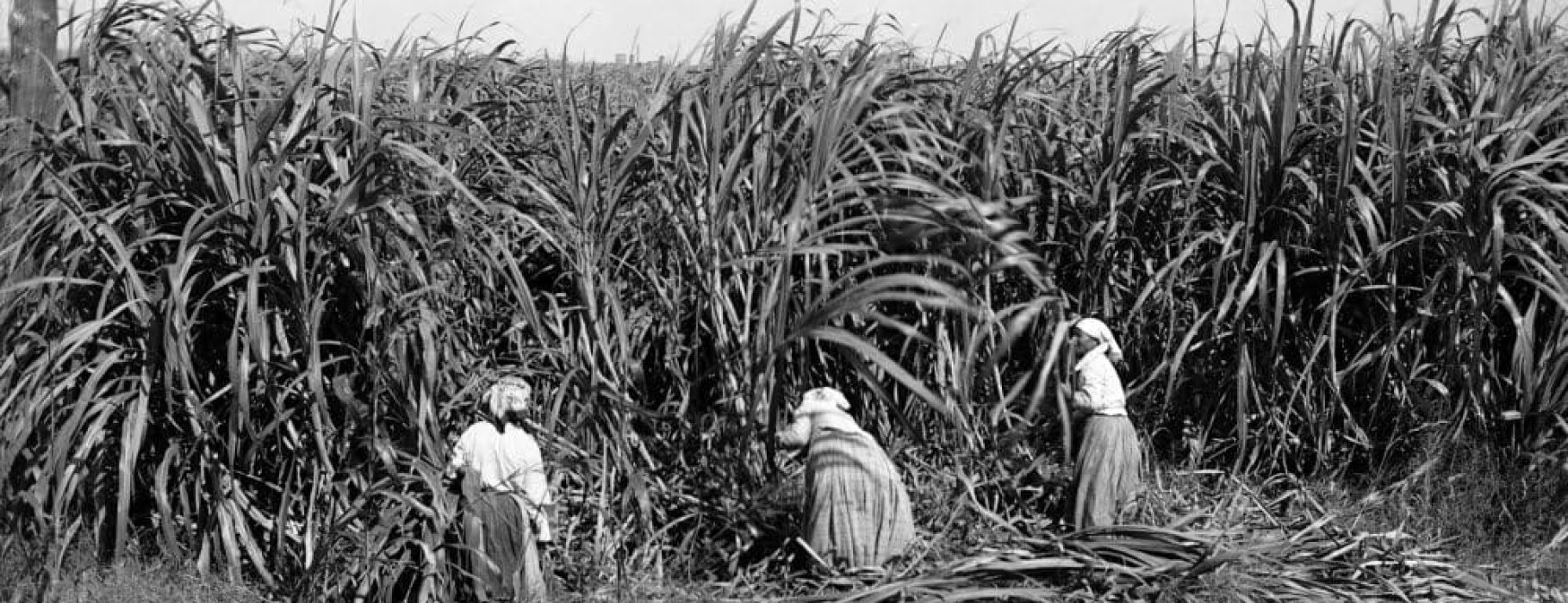
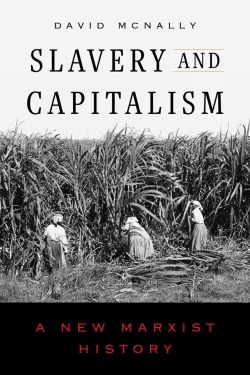
David McNally’s Slavery and Capitalism: A New Marxist History is an important contribution to the ongoing debate on the social character and dynamics of plantation slavery in the Americas.1 David McNally, Slavery and Capitalism: A New Marxist History (Oakland: University of California Press, 2025). The book successfully avoids the theoretical and historical problems characteristic of the two main interpretations of this form of social labor. On the one hand, much of the recent historical writing on plantation slavery by the “New Historians of Capitalism” equates practically all forms of profit-oriented commodity production and circulation with “capitalism.”2Three of the more important works on plantation slavery by the “New Historians of Capitalism” are Walter Johnson, River of Dark Dreams: Slavery and Empire in the Cotton Kingdom (Cambridge MA: Harvard University Press, 2013); Edward Baptist, The Half Has Never Been Told: Slavery and the Making of American Capitalism (New York: Basic Books, 2014); Sven Becket, Empire of Cotton: A Global History (New York: Alfred A. Knopf, 2014). For a discussion of the weaknesses of this approach, see Charles Post “Slavery and the New History of Capitalism” Catalyst 1, no. 1 (2017): 173–92, and Nick Nesbitt, The Price of Slavery: Capitalism and Revolution in the Caribbean (Charlottesville: University of Virginia Press, 2022), 31–36. This limitation of the “New History of Capitalism” is if anything exacerbated in Beckert’s more recent 1,300 page study Capitalism: A Global History (New York: Penguin, 2025), in which, as Corey Robin writes in his review of the book, “scholars of the new history of capitalism have no more sense of a system now than [before],” and lacking such theoretical, temporal, and spatial restrictions to capitalism, the result is a “collapse of time and space that makes not only politics but history itself such a difficult task at this moment.” Corey Robin, “The Long Revolution,” Nation, May 11, 2026, https://www.thenation.com/article/society/sven-beckert-capitalism-history-future/. On the other hand, historians inspired by the work of the late Eugene Genovese view the slave societies of the New World as “non-bourgeois civilizations” ruled by paternalist aristocrats motivated by a desire for personal domination rather than profit.3Among Genovese’s work see Eugene D. Genovese, The World the Slaveholders Made: Two Essays in Interpretation (New York: Random House, 1969) and Eugene D. Genovese, Roll, Jordan, Roll: The World the Slaves Made (New York: Random House, 1975). Genovese partially retreated from his claims about the “non-bourgeois” character of plantation slavery in Elizabeth Fox Genovese and Eugene D. Genovese, Fruits of Merchant Capital: Slavery and Bourgeois Property in the Rise and Expansion of Capitalism (New York: Oxford University Press, 1983). For a critique of the “non-bourgeois civilization” model of plantation slavery, see Charles Post, The American Road to Capitalism: Studies in Class-Structure Economic Development and Political Conflict, 1620–1877 (Chicago: Haymarket Press, 2012), 121–31. McNally constructs his alternative to these familiar positions based on a theoretical specification of capitalist production, which he defines as the production and appropriation of surplus-value by commodity-producing units locked in market competition.”4McNally, Slavery and Capitalism, 8. The planters’ debts to merchants and bankers, secured with their land and slaves, compelled the slave owners to economize the amount of abstract human labor embodied in the commodities they produced. Those planters who failed to hold their place in the competitive global markets for sugar, tobacco, and cotton would face bankruptcy. While lords and peasants marketed surpluses of agricultural products for millennia without fear of losing land and tools if they failed to cut costs, production only became capitalist when both nonproducers and direct producers became subject to market coercion. 

Along with the work of John Clegg, Slavery and Capitalism demonstrates that the slaveholders, whatever their subjective motivations and self-conception, were compelled to act as “profit-maximizers.”5John Clegg, “Credit Market Discipline and Capitalist Slavery in Antebellum South” Social Science History 42, no. 2 (Summer 2018): 343–76, https://doi.org/10.1017/ssh.2017.39. However, McNally, like Clegg and others, further argues that slaves themselves were legally coerced wage laborers, who could easily be replaced with labor-saving tools and methods.6John Clegg and Duncan Foley “A Classical-Marxian Model of Antebellum Slavery,” Cambridge Journal of Economics 43, no. 1 (January 2019): 107–38, https://doi.org/10.1093/cje/bex075. The fourth chapter of Slavery and Capitalism is composed almost entirely of historical cases in which chattel slaves, in addition to their forced and unpaid labor, performed work for monetary wages. This is historically indisputable and, while McNally does not clearly theorize this distinction, his point is well taken.7Nick Nesbitt discusses at length a case not addressed in McNally’s compendium, that of mixed slavery and wage labor in mid-nineteenth century Guadeloupe. Nick Nesbitt, The Price of Slavery, (Charlottesvill VA: University of Virginia Press, 2022), 104–06. We would argue that, in such cases, persons were both chattel slaves (when performing forced, unpaid labor) and, at other times, wage laborers.

To be clear, although Marx’s abstract critique of human rights argues that the worker in capitalism must “be the free proprietor of his own labor-capacity [and] hence of his person,” capitalism’s fundamental social relations of production—wage-labor and capital—do not necessarily require the idealized legal freedom of direct producers.8Karl Marx, Capital: A Critique of Political Economy vol. 1, trans. Ben Fowkes (Middlesex: Penguin Books, 1976), 270. Note that Marx at this initial point in his exposition does not place the qualifier “free” in scare quotes any more than Nesbitt does in Price of Slavery when discussing this passage. Since Nesbitt’s book stands alone in the body text of Slavery and Capitalism as McNally’s banner example of both a putatively neoliberal fetishization of legal status by some Marxist scholars (“Nesbitt…elevat[es] legal status above the economic coercion of capitalist relations”) as well as that of a “sterile formalism,” it seems only fair to point out that the accusation is at best tendentious and certainly unfair. McNally, Slavery and Capitalism, 111. To a greater extent even than McNally’s book, The Price of Slavery analyzes at length Marx’s ironic qualification of the freedom of the proletarian as no more than the “freedom” of those bereft of means of production to starve when unable to purchase subsistence goods available only in commodified form. Nesbitt, The Price of Slavery, 205, 222, 232, 265, 268. As long as the exploiters command the labor process and can easily expel labor from productionwhere capital can discharge workers at will in order to adjust output or replace workers with machines—the law of value operates. Legal-juridical bondage and other nonmarket compulsions on direct producers to sell their labor power do not indicate “the absence of capitalist production relations, but the extent to which capital has been able to historically subject wage-labor to its discipline.”9Martin J. Murray, The Development of Capitalism in Colonial Indochina (1870-1940) (Berkeley CA: University of California Press, 1980), 498, fn. 12. 

Such forms of bondage are common when workers are separated from the means of production but capital still has yet to subsume the labor process to its command in more than a “formal” manner—that is, when production is seasonal or where profits margins are so low that profitability depends on purchasing labor power below its costs of reproduction.10Charles Post “The Separation of the ‘Economic’ and the ‘Political’ under Capitalism: ‘Capital-centric Marxism’ and the Capitalist State,” Verso (Blog), January 14, 2016, https://www.versobooks.com/blogs/news/2345-charles-post-the-separation-of-the-economic-and-the-political-under-capitalism-capital-centric-marxism-and-the-capitalist-state?srsltid=AfmBOoq4U3Wee-IXNQjdl5bN8uWcGSwl8vvnYVTHoHvFHpaoHu0lKLT-. Unlike slaves, such legally coerced wage laborers do indeed “own” their labor power. At the same time, they face legal and juridical restrictions on the sale of their labor power—from the criminalization of unemployment, to fines or incarceration for leaving employment before their labor contract expires, to restrictions on their geographic mobility. Finally, McNally not only argues that slaves were coerced wage laborers who were easily expelled from production to allow technical innovation and productivity gains, but further claims that the enslaved were a “chattel proletariat” who “constructed cultures of freedom central to which was a producer ethic based on the right of workers to all that they produced.”11McNally, Slavery and Capitalism, 16. Put another way, McNally argues that slave laborers were proletarians who embraced democratic and collectivist—that is, socialist—aspirations for freedom.

Slavery and Capitalism makes a strong case on a number of key issues. It is indisputable that the social survival of the planters—as owners of slaves, land and tools—depended on successful market competition. In English speaking plantation regions, land, tools and slaves were collateral for loans, compelling the slave-owning planters to produce and sell cash crops at or below the competitively set socially average necessary labor time.12 There is evidence that the land and slaves of planters in the colonies of Absolutist France could not be seized when the planters defaulted on loans. See Robin Blackburn, The Making of New World Slavery: From the Baroque to the Modern (London: Verso, 1997), 282–83, 444–45. If they failed, they faced the loss of that collateral. Nor is there any question that planters organized production in many ways similar to capitalists—they engaged in rigorous cost accounting; organized cooperative, “gang” labor processes (at least in sugar and cotton) under their command; and strove to both lengthen and intensify the pace of labor in order to “squeeze the pores of the working day.” Finally, there is ample evidence that the enslaved, both organized their class struggle in similar ways as wage-laborers—slowing-down the pace of work, feigning illness, refusing to work beyond “customary” hours, destruction of tools, and so on—and did not aspire to become the juridically “free,” individually acquisitive subjects of classical liberalism.

McNally successfully transcends the increasingly sterile debate between those who equate any form of commodity exchange with capitalism and those who insist that slaveholders were paternalist lords uninterested in cost cutting and profit making. However, McNally’s claim that slavery in the Americas was of a capitalist form and the enslaved were a “chattel proletariat” is not convincing. There is strong evidence that planters did not purchase the labor power of the slaves, but instead purchased the enslaved as “means of production in human form.” McNally exaggerates the ability of planters to easily expel labor from production in order to introduce labor-saving technical innovations—that is, to replace living with dead labor—through slave sales and rentals. The resulting restrictions on the planters’ ability to expel labor production shaped the way in which slaveholders responded to “market coercion,” as well as the goals of the slaves’ struggles for self-emancipation. Technical innovation under slavery did not take the uniquely capitalist form of being relatively continuous and labor saving. As Dale Tomich argues, the limits on the planters’ ability to make slaves redundant gave technical innovation under plantation slavery a “once and for all” character, usually coinciding with the introduction of new crops or movement to a new frontier of cultivation. Generally such technical innovation did not necessitate making slaves “redundant” through sales.13Dale W. Tomich, Slavery in the Circuit of Sugar: Martinique and the World Economy, 1830-1848, 2nd ed. (Albany, NY: State University of New York Press, 2016), Chapter 4. Finally, the relatively inflexible costs of slave labor required planters to put the enslaved to work producing their own subsistence, often on “garden plots” or jardins creoles tilled independently by the bondspeople. The slaves’ independent household production shaped the form and goals of the quotidian and revolutionary class struggles of the enslaved in ways fundamentally different from those of wage laborers.

Slave-owning planters used their legal-juridical authority to transform other human beings into their property as means of production in human form.

Expelling Labor From Production

Without clearly acknowledging this, McNally does implicitly recognize a fundamental difference between slaves and wage-laborers. Despite claiming that the slaves’ labor-power was “commodified,” he contradicts this position to correctly argue that slave prices, like land prices, represented a capitalization of “anticipated surplus-value production.”14McNally, Slavery and Capitalism, 103–5. In other words, slaves were “priced” along the same criteria as land—as a means of production. By contrast, as discussed above, wages are determined by the value of labor power, itself determined by the value of the commodities required to reproduce the workers’ ability to work. “Anticipated surplus-value production” serves to determine whether or not capital will purchase labor power, but it does not determine the value of labor power. From this perspective, and this is a crucial theoretical point that Dale Tomich and Charles Post have emphasized, the pricing of slaves means that the productive capacity of slaves must be “used up” in much the same way as the investment in land and tools—over several production cycles. Slaves can only be made “redundant” with difficulty—the planter must either find a buyer for their “excess” slaves or keep them working over their life cycle. In contrast, the value of labor power of wage workers is “used up” after a set period of time, enabling capitalists to discharge them at will. As a result, slave-owning planters are unable to easily introduce labor-saving tools and methods—the characteristic way capitalists consistently raise the productivity of labor. 

McNally’s argument repeatedly manifests a peculiar theoretical projection. He explicitly claims that Nesbitt’s The Price of Slavery ignores Marx’s crucial distinction between transhistorical, anthropological human labor and the commodity labor power, which is sold only within specific social forms (that is, capitalism).15McNally, Slavery and Capitalism, 269. In fact, the crucial point of Nesbitt’s entire critique of the Marxist historians of slavery in the first chapter of The Price of Slavery is that they have all ignored this distinction, and in contrast to McNally’s accusation, Nesbitt extensively develops it to ground his critique and subsequent theoretical position in the following chapter. Nesbitt, The Price of Slavery, 70–75. Instead, we would argue that it is McNally’s argument that actually conflates living labor and the commodification of labor power. There is no question that “chattel workers” were living laborers who were “bearers of labor power” that generated immense profits for their masters.16McNally, Slavery and Capitalism, 15. However, this formulation confuses the human capacity for self-consciously purposeful labor with the commodification of labor power; and, confuses what Anwar Shaikh has termed, “profit on alienation” with the production of surplus value. Put another way, all humans possess the capacity to labor, but it is only under capitalism that nonproducers purchase the direct producers’ labor power for a set period of time. It is only under these conditions that a social surplus of labor time takes the historically unique form of surplus value. Similarly, profit exists as a form of surplus labor in all commodity producing noncapitalist societies, but in the form of “profit on alienation” rather than the specifically capitalist forms of surplus value

There is no question that the enslaved were human beings and thus capable of purposeful labor. They were clearly persons who were compelled to perform surplus labor and produce a surplus product. Nor is there any doubt they consistently resisted exploitation. However, the same is true for rent-paying peasant producers in tributary societies. Neither the noncapitalist lord nor the slaveholder purchase labor power. The lord deployed their legal-juridical authority to compel peasants—who have effective possession, if not legal property, in land and tools—to perform surplus labor on the lords’ lands or to hand over their physical surplus as rents. Slave-owning planters, in turn, used their legal-juridical authority to transform other human beings into their property as means of production in human form. This human property, lacking juridical freedom and all means of production other than their non-commodified labor power, could be compelled to work producing goods for the market.17Such crucial distinctions regarding legal-juridical authority indicate a further disagreement with McNally, who explicitly accuses Nesbitt’s The Price of Slavery of ignoring the social nature of Marx’s analysis to focus on legal rights. McNally, Slavery and Capitalism, 264. In fact, as discussed above, the juridical status of humans within the capitalist social form—as bearers of rights to their own self as property—is an essential and necessary component of Marx’s basic position, grounding rather than obscuring his critique of human rights, Bentham, and ideology, Capital vol. 1, 271. See also Etienne Balibar’s argument that juridical forms are a constant and necessary feature of Marx’s critique and demonstration throughout the three volumes of Capital. Etienne Balibar, “Hegel, Marx, Pashukanis, and the Idea of Abstract Right as a Bourgeois Form,” in Institution: Critical Histories of Law, ed. Cooper Francis and Daniel Gottlieb (London: CRMEP Books, 2023). 74–100.

In neither slavery nor tributary societies (that is, the various forms of peasant-based production where nonproducers use legal and juridical power to extract “tribute” in the form of rents and taxes) does the surplus product take the form of surplus value. As discussed above, in capitalism, surplus value is produced through the exchange of equivalents. The wage-worker is paid the value of their labor power—the value of all the commodities required for their social reproduction. The capitalist “consumes” this labor power, leveraging the market dependence of wage laborers to compel them to produce commodities whose value exceeds those of their labor power to produce surplus value. Under tributary forms and slavery, surplus product takes the form of what Shaikh and others have dubbed “profit on alienation.”18Anwar Shaikh, Capitalism: Competition, Conflict, Crises (New York: Oxford University Press, 2016), 209–12; Alper Duman and E. Ahmet Tonak, “Clarification and Application of the Category of Profit on Alienation” in In the Tracks of Marx’s Capital: Debates in Marxian Political Economy and Lessons for 21st Century Capitalism, ed. Singur Savran and E. Ahmet Tonak (London: Palgrave/Macmillan, 2024), 164–67. Compelled legally and juridically to “alienate” the product of their labor without receiving the full market value of their labor power in exchange, noncapitalist direct producers produce surplus product which yields a profit on the market as a form of “unequal exchange.”19Durman and Tonak, “Clarification and Application of the Category of Profit on Alienation,” p. 167. The ability of the planter to produce more cheaply than nonslaveholding competitors allowed them to accrue profits on alienation when they sold this product at world-market prices. 

McNally’s conceptual confusion of the human capacity for purposeful labor and the buying and selling of labor power, as well as of profit and surplus value lead him to exaggerate the impact of two historical features of southern US slavery. The first is the vibrant market for the enslaved. In the antebellum United States, slaves were a highly “liquid asset” that could easily be sold to other slaveholders. The second was the practice of “slave-hiring.” Slave owners were able to lease their slaves for set periods to others who would put the enslaved to work. Together, slave sales and leasing purportedly gave the planters a flexible labor force whose size could easily be adjusted to changes in market conditions and to introduce labor-saving tools and methods. However, a closer examination of the concrete dynamics of both the domestic slave market and slave hiring in the United States reveals a more complex phenomenon that depended upon the coexistence of both a “slave society” and a “society with slaves” in the US South. 

The distinction between “slave societies” and “societies with slaves,” first introduced by the classical historian M.I. Finley and applied to the US experience by Ira Berlin, recognizes that slavery as a legal status has existed in almost all class-divided societies before the late nineteenth century.20 M. I. Finley, Ancient Slavery and Modern Ideology (New York: The Viking Press, 1980); Ira Berlin, Many Thousands Gone: The First Two Centuries of Slavery in North America (Cambridge MA: Harvard University Press, 1998), Parts I and II. Most of these were “societies with slaves”—that is, societies in which slavery did not structurally dominate social production. Instead, slaves coexisted with artisans and peasant-farmers of a variety of legal statuses in ancient Egypt, medieval Europe, the Middle East, and many Asian tributary societies. By contrast, slave societies have been relatively rare—limited specifically to the New World slave colonies and Ancient Rome.21There is an ongoing debate about whether the ancient Greek city states, in particular Athens, were “slave societies,” as argued by G. E. M. de Ste. Crox, The Class Struggle in the Ancient Greek World: From the Archaic Age to the Arab Conquests (London: Verso Books, 2025), or “societies with slaves,” as claimed by Ellen Meiksins Wood, Peasant-Citizen and Slave: The Foundations of Athenian Democracy (London: Verso Books, 2015). In these societies a large proportion—but not necessarily the majority of producers—are enslaved and toil in

cooperative labor processes under the command of their masters to produce the bulk of the surplus product.

The tobacco regions of the southern mainland British American colonies transitioned from a “society with slaves”—in which a minority of slaves worked side-by-side with a much larger group of indentured servants—to a “slave society” based on African chattel slavery in the aftermath of Bacon’s Rebellion of 1676–77.22Edmund S. Morgan, American Slavery, American Freedom: The Ordeal of Colonial Virginia (New York: W.W. Norton & Co., 1975); Berlin, Many Thousands Gone. However, as tobacco prices plummeted and its large-scale cultivation in Maryland and Virginia became unprofitable in the aftermath of the American Revolution, the “upper south” again became a “society with slaves.”  “Agrarian reform” in the upper south saw most planters abandoning tobacco cultivation, and instead shifted to growing wheat and other small grains as petty-capitalist farmers working alongside household members and a handful of enslaved people in the early nineteenth century. 

Genovese, in one of the few arguments he made that has withstood decades of criticism, points out that the success of “agrarian reform” in the upper south required a market for “redundant” slaves both to reduce the labor force and to finance the purchase of new tools, seeds, and the like.23Eugene D. Genovese, The Political Economy of Slavery: Studies in the Economy and Society of the Slave South (Middletown CT: Wesleyan University Press, 1988), Chapters 6 and 10.  The “liquidity” of the slave asset depended upon the continuous geographic expansion of a relatively technically stable cotton frontier in the lower south. In addition, the internal slave trade—both the sale of “surplus” slaves from the upper to lower south and sales resulting from bankruptcies and the like—affected only 16 percent of the total slave population over the half century

between 1810 and 1860, an average of a mere 1.6 percent per year.24 According to Tadman’s Speculators and Slaves a total of 997,478 people were trafficked from the upper to lower south between 1810 and 1860. Michael Tadman, Speculators and Slaves: Masters, Traders and Slaves in the Old South (Madison, WI: University of Wisconsin Press,1989), 12. According to Russell’s “Articles Sell Best Singly” and “South Carolina’s Largest Slave Auctioneering Firm” a roughly equal number of slaves were sold as the result of bankruptcies and the like. Thomas D. Russell, “Articles Sell Best Singly: The Disruption of Slave Families at Court Sales,” Utah Law Review, no. 1, (1996): 1161–1209, https://doi.org/10.63140/u-ebnql16; Thomas D. Rusell, “South Carolina’s Largest Slave Auctioneering Firm – Symposium on the Law of Slavery: Criminal and Civil Law of Slavery,” Chicago-Kent Law Review 68, no. 3 (1992): 1241–52, available at https://scholarship.kentlaw.iit.edu/cklawreview/vol68/iss3/10/. The US Census (https://www2.census.gov/library/publications/1909/decennial/century-populaton-growth-part15.pdf) counts a total slave population of 12,475,535. In sum, the dynamic internal slave market depended upon the transition to a “society with slaves” in the upper south and impacted relatively few enslaved people—providing little “flexibility” to the labor force of the “slave society” centered on cotton production for the capitalist world market.

Slave leasing was a form of legally bonded wage labor, where employers could easily expel direct producers from production at the end of a time-limited lease. It was also centered in those areas of the US South where slavery was one of a number of forms of dominated labor. The most recent study of slave leasing found that at most 10 percent to 20 percent of slaves were leased at any time in the antebellum United States.25Jonathan D. Martin, Divided Mastery: Slave Hiring in the American South (Cambridge, MA: Harvard University Press, 2004), Chapter 1. See also Claudia Dale Goldin, Urban Slavery in the American South, 1820-1860 (Chicago: University of Chicago Press, 1976). However, the vast majority of slaves were leased in areas that were “societies with slaves”—the upper south and the southern urban centers. The largest share of slave rentals, between 30 percent and 40 percent of the total, were to urban employers who put slaves to work, often side by side with legally free laborers, in domestic service; as skilled construction workers (masons, carpenters); and in unskilled work as teamsters, warehouse and longshore workers. The next largest share (10 percent to 30 percent) was leased to capitalist industry (iron, textiles, mining) or deployed on public works (roads and so on). Another 10 percent to 20 percent were leased by petty capitalist farmers in the upper south to their neighbors in the region. Fewer than one in ten slaves were leased on the cotton frontier, and most engaged in preparing the land for cultivation, removing boulders and tree trunks, and some in the first cotton planting. However, once cotton production was established, almost all the enslaved laborers became the property of the planters. Put simply, slave leasing was a marginal activity in the main locus of the southern “slave society”—the “cotton kingdom” of the lower south—and had little impact on its cultivation.

It was the noncapitalist master-slave social relation of production that was the obstacle to “labor-shedding” technical innovation.

Pace of Technical Innovation

The “whip of competition” compelled planters to strive to economize necessary labor and maximize the appropriation of surplus labor, as under capitalism. However, the methods they employed were only superficially similar to those used by capitalists. Planters attempted to extend the working day and the organized slaves into collective labor processes (“gang-labor”) and “squeezed the pores” out of the working day. These were forms of absolute surplus extraction, which was the only means of systematically increasing labor productivity in noncapitalist societies. However, we find few examples of the specifically capitalist form of surplus extraction—that is, relative surplus extraction through the regular introduction of labor-saving technical innovations that reduce necessary labor—under plantation slavery. As Tomich notes, “because the person of the laborer was appropriated as property… the master… had to provide for their maintenance whether they worked or not.”26 Dale Tomich, Slavery in the Circuit of Sugar, 411. The impossibility of a “reserve army of labor” in a slave society made relative surplus extraction and the replacement of living with dead labor—the roots of capitalism’s unique dynamism and crisis tendencies—a highly episodic phenomenon. The most important of these technical innovations—the replacement of the hoe with plows, the mechanized ginning of cotton, and the replacement of the “Jamaica Train” with the vacuum pan in sugar refining—coincided with either the introduction of new crops or the migration of plantations to new agricultural frontiers. Once a new crop was introduced or a new frontier came under cultivation, slave plantation economies experienced no labor-saving technical innovation.27 Post, The American Road to Capitalism, 110–16, 136–41.

McNally and many other scholars rely on the pioneering work of Olmstead and Rhode to bolster their claims that there was a relatively continuous process of labor-saving technical innovation under slavery, especially in the development of cotton hybrids that were easier and faster to harvest.28Alan L. Olmstead and Paul V. Rhode, Creating Abundance: Biological Innovation and American Agricultural Innovation (New York: Cambridge University Press, 2008), Chapter 4; Alan L. Olmstead and Paul V. Rhode, “Biological Innovation and Productivity Growth in the Antebellum Cotton South” Journal of Economic History 68, no.4 (2008): 1123–71, https://doi.org/10.1017/S0022050708000831. A careful reading of Olmstead and Rhode’s work reveals that most of the gains in labor productivity in cotton harvesting were the result of the introduction of the petit-gulf strain in the 1830s. Other cotton strains introduced in the 1840s and ’50s did not yield significantly larger and more easily picked cotton bolls. The well established and continuous improvements in the productivity of cotton-harvesting labor during the last three decades of slavery were the result of two processes. The first was the “once and for all” introduction of the petit-gulf strain on the cotton frontier, followed by its diffusion to the older areas of cotton cultivation. The second was the geographic expansion of plantation slavery to new and more fertile lands. Finally, productivity gains were for the most part limited to harvesting, while planting and cultivation remained technically unchanged, allowing increased output per worker without a reduction in the slave workforce. 

McNally acknowledges the “limits on mechanization” in cotton cultivation, but attributes them to characteristics of “agrarian production in general, not the use of enslaved labor.”29 McNally, Slavery and Capitalism, 98. He relies on Mann and Dickenson’s classic essay on agriculture, claiming that the absence of labor-saving technical innovation is rooted in the surplus of production time over labor time in agriculture and other nature based production processes. However, Mann and Dickenson argue that the “excess of production time over labor time” and the resultant “slack season” led to overcapitalization of capitalist agriculture, with “constant capital lying idle during the excess production time.”30Susan A. Mann and James M. Dickenson, “Obstacles to the Development of a Capitalist Agriculture,” Journal of Peasant Studies 5, no. 4 (1978), 475. Historically, cotton cultivation posed no insurmountable technical obstacles to mechanization. In the US South, cotton production began to be mechanized in the early twentieth century—immediately after the transformation of sharecroppers from tenant farmers who organized household cultivation to wage workers working, again, in cooperative gang labor. Almost immediately, we see the introduction of horse-drawn plows able to make multiple furrows (replacing a mule-drawn simple plow), and horses were replaced by petroleum powered tractors during the first World War in planting and weeding. By 1940, cotton harvesting was thoroughly mechanized as well.31Susan A. Mann, Agrarian Capitalism in Theory and Practice (Chapel Hill: University of North Carolina Press, 1990), Chapter 5; Joseph P. Reidy, From Slavery to Agrarian Capitalism in the Cotton Plantation South: Central Georgia,1800-1880 (Chapel Hill: University of North Carolina Press, 1992), Chapter 9; Gavin Wright, Old South, New South: Revolutions in the Southern Economy Since the Civil War (New York: Basic Books, 1986), Chapter 4. In sum, it was not the nature of agricultural production, but the noncapitalist master-slave social relation of production that was the obstacle to “labor-shedding” technical innovation.

The slaves’ resistance had fundamentally different goals than that of wage workers.

“Chattel Proletariat”

McNally correctly points to the similarities in the ways in which slaves and wage workers, both engaged in cooperative labor processes under the command of their exploiters and resisted exploitation in the day to day and periods of open insurrection. The enslaved resisted exploitation through slowdowns, brief work stoppages, absenteeism, and sabotage. They also periodically engaged in mass strikes to achieve self-emancipation. However, at high points of revolutionary class struggle, the slaves’ resistance had fundamentally different goals than that of wage workers. At these moments, neither the enslaved nor wage workers sought to become competitive, property-owning proprietors. Instead, the “freedom dreams” of wage workers envisioned a democratic and collectivist appropriation of the means of social labor.32Robin D.G. Kelley, Freedom Dreams: The Black Radical Imagination (New York: Penguin Books, 2003). Those of the enslaved projected a society of independent peasant producers that would combine “dedication to the advancement of the household with a commitment to the collective well-being of a community locked in conflict with the master class.”33McNally, Slavery and Capitalism, 129. Like peasants in almost all parts of the world, former slaves established villages, many of which, in particular in the postrevolutionary rural Haitian lakou, were “egalitarian systems without the state.” Village organization took on “the tasks of social organization” usually associated with state institutions, including “regulation of inheritance, land ownership, and family relationships.”34 Laurent Dubois, Haiti: The Aftershocks of History (New York: Metropolitan Books, 2012), EPUB e-book, Chapter 2. Individual households organized the cultivation of their plots using family labor, engaging in “safety-first” agriculture, prioritizing the cultivation of crops for consumption, and selling only physical surpluses on local or regional markets to obtain the cash to purchase goods that could not be produced in the village.

As in peasant villages globally, rural Haitian families relied on limited forms of cooperative labor between individual households (the Haitian konbit or combite) to build houses, clear fields in preparation for planting, or harvest (usually the most time-sensitive part of rural production). Wages and money were not exchanged; instead, this type of “neighborly exchange” cemented bonds of reciprocity among peasant households. In sum, former slaves in the New World aspired to and created a noncapitalist social form that maintained small-scale farming, mutual aid, and solidarity among production units. 35On Haiti, where the peasant villages achieved their greatest autonomy from the existing state, see: Melville J. Herskovitz, Life in a Haitian Valley (New York: Alfred A. Knopf, 1937); Carolyn Fick, The Making of Haiti: The Saint Domingue Revolution from Below (Knoxville: University of Tennessee Press, 1990); Gérard Barthélémy, L’univers rural haïtien: Le pays en dehors (Paris: L’Harmattan 1991); Michel-Rolph Trouilot, Haiti: State Against Nation: The Origins and Legacy of Duvalierism (New York: Monthly Review Press: 1990); Jean Casimir, The Haitians: A Decolonial History (Chapel Hill: University of North Carolina Press, 2020); and Nick Nesbitt, “La société égalitaire sans état: Gérard Barthélémy et le problème du pouvoir dans la Révolution Haïtienne,” Revue de la Société haïtienne d’histoire et de géographie: Hommage à Gérard Barthélemy 83, no. 36 (January-June 2009): 131–46. A system of reciprocal, cooperative labor alongside household-based agriculture also existed in what became the northeastern United Statez in the eighteenth century. See Michael D. Merrill, “Self-Sufficiency and Exchange in Early America: Theory, Structure, Ideology” (PhD diss., Columbia University, 1985), 34–52. By contrast, revolutionary wage workers envisioned, and at times established, democratic collectivist organization of social production. The “freedom dream” of socialized production was not limited to urban or industrial workers historically. Agrarian wage laborers on plantations such as those in Andalucia during the Spanish revolution occupied the latifundia, and did not divide them into household plots. Instead, they collectively planted, cultivated, and harvested crops.36E. J. Hobsbawm, Primitive Rebels: Studies in Archaic Forms of Social Movement in the 19th and 20th Centuries (New York: Frederick A. Prager, 1963), Chapter V.  

The differences in “freedom dreams” between wage workers and slaves are rooted in the specific character of slaves as “means of production” in human form who had to be maintained even when they were not engaged in commodity production for their masters. In an agricultural context, where production time is greater than labor time, planters were compelled to find ways to reduce the costs of maintenance during the “slack season” for the main cash crops. Throughout the slave societies of the New World, especially after the abolition of the African slave trade, planters strove to put the enslaved to work producing their own subsistence. Plantation self-sufficiency in food, which became near universal in the nineteenth century, took different forms.37For a discussion of plantation self-sufficiency in the Americas, see Post, American Road to Capitalism, 141–44. On the larger cotton plantations in the US South, the masters would organize gangs of slaves during the cash crop’s “slack season” to plant and harvest corn for the direct consumption of slaves and to feed livestock eventually fed to the enslaved. 

Almost all New World planters allowed the slaves to engage in independent production on garden plots or provision grounds year-round during their “free time.” As Dale Tomich points out, this “proto-peasant” activity—the slaves’ independent household production—“offered a space for slave initiative and self-assertion” that “allowed them to begin to construct an alternative way of life” from that of gang-labor producing commodities for the world-market. As a result, “the bonds of dependence of the slave on the master slowly began to dissolve, and the activities of the slaves gradually transformed the foundations of slave society itself.”38Tomich, Slavery in the Circuit of Sugar, 390. Put another way, the division of the slaves’ working time between collective labor under the masters’ command on “cash crops” and independent household labor on garden plots producing for their own consumption defined both the contours of day to day class struggle and their “freedom dreams” in revolutionary periods where emancipation from bondage was on the historic agenda.39This is precisely the dialectic that Aimé Césaire explores in his theatrical masterpiece The Tragedy of King Christophe. Aimé Césaire, The Tragedy of King Christophe, trans. Paul Breslin and Rachel Ney, (Evanston: Northwestern University Press, 2015). On a quotidian basis, slaves struggled to limit the length of the working day to maximize their time “working freely,” and contested with their masters over the control of their children’s labor power to devote more household labor to their independent production.40Marie Jenkins Schwartz, Born in Bondage: Growing Up Enslaved in the Antebellum South (Cambridge MA: Harvard University Press, 2000), Chapter 5. This lived experience, based in the distinctive master-slave relation of production, produced the slaves’ definition of “freedom” as neither petty-bourgeois entrepreneurship nor democratic collectivist reorganization of social production, but as independent household production—peasant production and “safety-first” agriculture. In sum, the “general strikes” of the enslaved did not seek to establish the collective rule of the producers, but a society of small producers secure in their possession of their individual farmsteads. The revolutionary enslaved envisioned “freedom” not as socialism, but as a “peasant democracy.”41Ellen Meiksins Wood, Peasant-Citizen and Slave: The Foundations of Athenian Democracy (London: Verso Books, 1988).

SHARE

HELLO, COMRADE

While logged in, you may access all print issues.

If you’d like to log out, click here:

NEED TO UPDATE YOUR DETAILS?

Support our Work

Gift Subscriptions, Renewals, and More