Nothing is evil in the beginning. Even Sauron was not so.
—Elrond, The Lord of the Rings
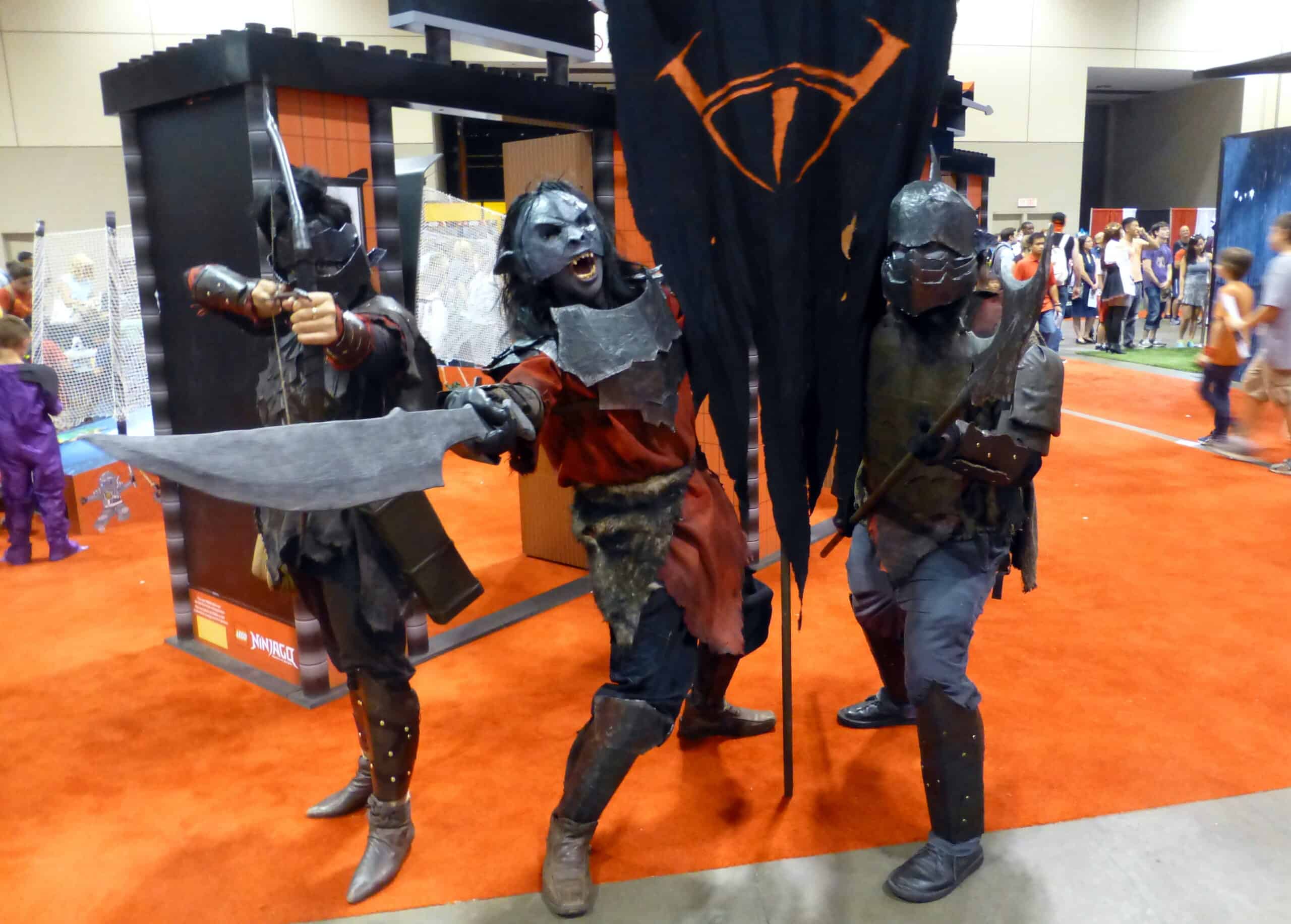
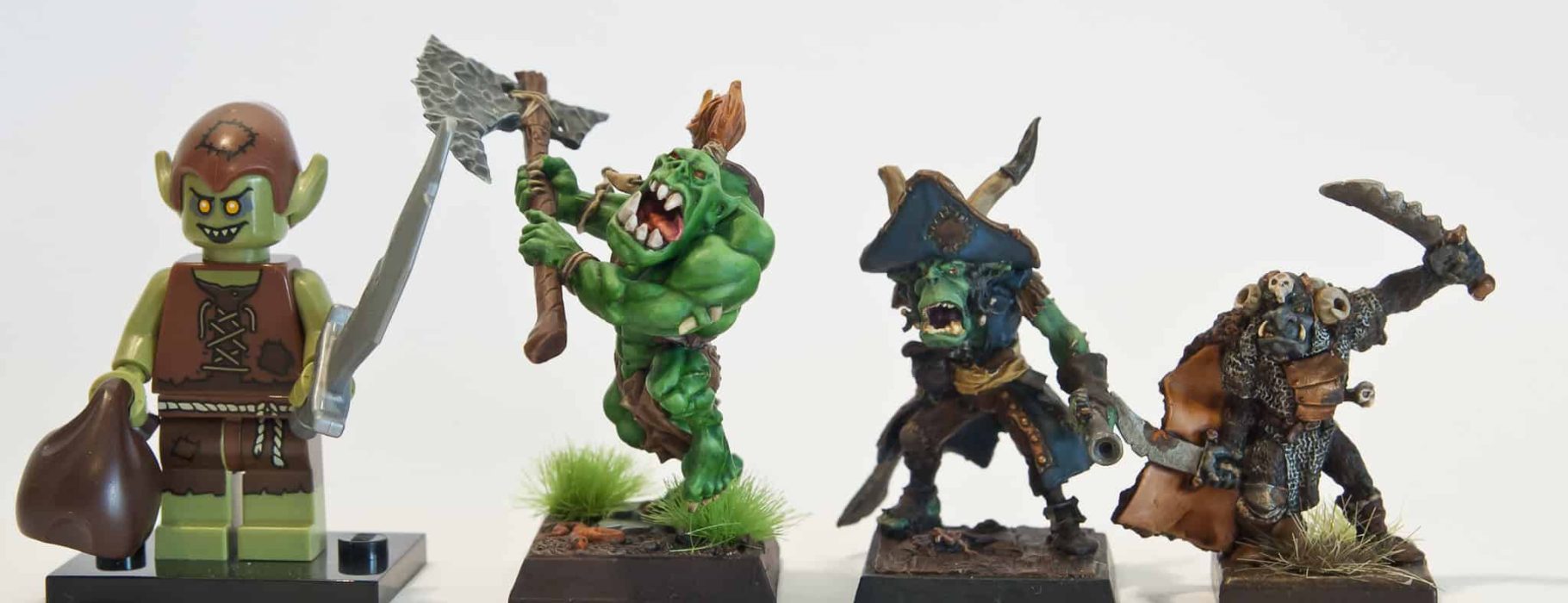
Orcs are a bit of a problem. They’re loud. They’re quarrelsome. They’re a little too fond of machines. And they’re everywhere. J. R. R. Tolkien reportedly would exclaim “Orcs!” at the “savage sound” of a chainsaw. When he heard a motorcycle, he’d say, “There is an Orc!”1Robert T. Tally Jr., The Mismeasure of Orcs: A Critical Reassessment of Tolkien’s Demonized Creatures (Jefferson: McFarland and Company, 2025), 29, https://mcfarlandbooks.com/product/the-mismeasure-of-orcs/?srsltid=AfmBOopMJF2zN2NwOlvWwEN07Mpo-tlkKACpRpGCBbvg8OSBP-a_hwqI. Best not to let these noisy ruffians get too close to your borders. This, anyway, is what you might conclude if you casually read The Lord of the Rings or watched Peter Jackson’s adaptation. On this view, orcs are beastlike, humanoid creatures whose hideousness is straightforwardly analogous to their moral corruption. But what if we’ve been unfairly maligning these clangorous creatures? What if orcs deserve not contempt but sympathy or, dare one say it, solidarity?
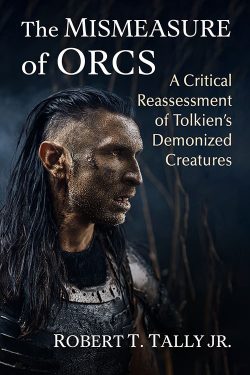
This counterintuitive hypothesis drives Robert T. Tally Jr.’s enjoyable monograph, The Mismeasure of Orcs: A Critical Reassessment of Tolkien’s Demonized Creatures (McFarland, 2025). The allusion to Stephen Jay Gould’s The Mismeasure of Man—a classic assault on scientific racism—signals Tally’s ambition. He wants to rescue orcs from their infamy. Bringing a rigorous eye to Tolkien’s depiction of orcs, Tally asks us to consider them as human—all too human—subjects. Tally’s analysis helps clarify some of the ideological tangles of Tolkien’s powerful imagination, an imagination that has shaped our popular culture and has influenced countless writers, molding our understanding of power. The Mismeasure of Orcs offers a dialectical reconsideration of Tolkien’s legendarium, presented through the close analysis of its most vilified and, Tally argues, most misunderstood creatures. Tally brings an astute Marxist, and specifically Jamesonian, eye to the plight of these demonized denizens of Middle-earth.
Tally is not an unbiased guide. He is, by his own admission, an “unapologetic orc-sympathizer,” inclined to interpret against the grain.2Tally Jr., The Mismeasure of Orcs, 10. He’s also a professor of English at Texas State University and an increasingly essential Tolkien scholar. In the last five years, he’s published three full monographs on JR2T (Tolkien’s lesser-known nickname), including not only the volume under review but also J. R. R. Tolkien’s ‘The Hobbit’: Realizing History through Fantasy—A Critical Companion and Representing Middle-earth: Tolkien, Form, and Ideology.3Post by all-things-devours (@all-things-devours), tumblr, March 16, 2017, 9:09 p.m., https://www.tumblr.com/all-things-devours/158493879638/tolkiens-lesser-known-nickname; Robert T. Tally Jr., R. R. Tolkien’s ‘The Hobbit’: Realizing History Through Fantasy—A Critical Companion (London: Palgrave Macmillan, 2022); Robert T. Tally Jr., Representing Middle Earth: Tolkien, Form, and Ideology (Jefferson: McFarland and Company, 2023).
In his 2022 study of The Hobbit, Tally argues that the book is, counterintuitively, a “historical novel,” not in the sense that it depicts real historical events but in the sense of bringing a “historical register” to its mythopoeic raw materials.4Tally Jr., J. R. R. Tolkien’s ‘The Hobbit,’ 28. Bilbo makes history when he’s forced to exit his sheltered bourgeois hobbit hole. But it’s not exactly the case that the halfling enters history when he leaves the Shire. Instead, it’s his fish-out-of-water story and his sometimes anachronistic encounter with the mythic world of The Silmarillion (1977) that brings Arda down to Earth, so to speak, dragging a mythic world into history, sometimes kicking and screaming. In Representing Middle-earth, meanwhile, Tally aligns what Samwise Gamgee calls the “great tales” with what Fredric Jameson names history, a collective narrative we all partake in and which, as Sam puts it, “never end[s].” “We’re in the same tale still!” Sam concludes. “It’s going on.”
With The Mismeasure of Orcs, we might say that Tally has completed his own scholarly trilogy, a heroically dialectical rewriting of Tolkien Studies. Tally joins a robust debate about what orcs reveal about the racial structure of Tolkien’s influential secondary world, and how its racism is enmeshed in the professor’s vision of political economy and empire. Orcs are notoriously racialized figures. In a 1958 letter, Tolkien wrote that orcs are “corruptions of the ‘human’ form seen in Elves and Men. They are (or were) squat, broad, flat-nosed, sallow-skinned, with wide mouths and slant eyes: in fact degraded and repulsive versions of the (to Europeans) least lovely Mongol-types.”5Quoted in Tally Jr., The Mismeasure of Orcs, 27.